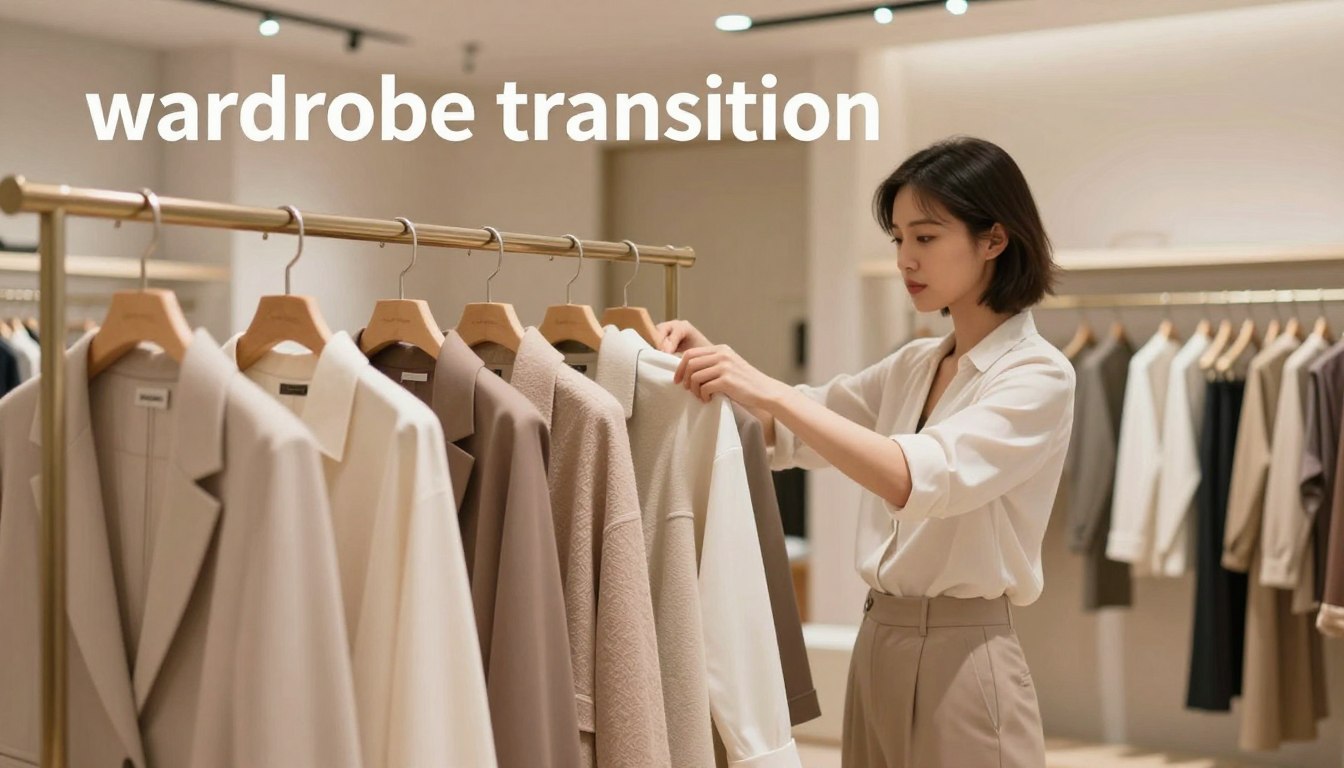
Wardrobe Transition Tricks Using Keyframes & Prompt Switches
Ever wondered how your favorite creators do that perfect outfit change in their videos? It seems like magic, but it’s all about mastering editing tricks. These tricks mix real life with digital creativity.
Learning to use a keyframe prompt can turn simple clips into amazing stories. This method lets you control when and how your look changes on screen.
You don’t need a big budget for professional results. With the right pokimane ai wardrobe transitions techniques, you can boost your content quality. This guide will teach you how to do a smooth wardrobe transition with tools like Wondershare Filmora.
Key Takeaways
- Master the art of timing your edits for a seamless visual flow.
- Learn how to utilize keyframe logic to trigger specific visual changes.
- Discover how to implement prompt switches to enhance your creative output.
- Understand the mechanics behind professional-grade video editing effects.
- Improve your storytelling by creating engaging and dynamic content shifts.
Understanding the Mechanics of Pokimane AI Wardrobe Transitions
To get great results with pokimane ai wardrobe transitions, you need to know how they work. These changes happen because of a mix of software rules and AI models. This mix makes the visuals move smoothly.
Defining the Role of Keyframes in AI Video
Keyframes are like anchor points for your video. They show the AI where to place specific poses or outfits in the timeline.
- They keep the structure during movement.
- They guide the AI on what to do next.
- They make sure the changes are planned, not random.
How Prompt Switches Influence Generative Output
Prompt switches let the AI change clothes in the middle of a video. When you switch prompts, the AI looks at new words to understand.
This lets the system smoothly change from one look to another. Getting good at using these switches is crucial for pokimane ai wardrobe transitions in your work.
The Importance of Temporal Consistency
Keeping the animation smooth is key. Without it, the AI might not keep the character’s look right while changing clothes.
Make sure the frames flow well to keep the audience interested. By fine-tuning your settings, you can get pokimane ai wardrobe transitions that look natural and polished.
Preparing Your Base Assets and Character Models
Creating top-notch AI transitions starts long before you start your animation software. You need to build a solid foundation by preparing your base assets and character models with great care. This first step is crucial for the quality of your final animation and helps avoid common mistakes.
Selecting High-Quality Reference Images
The quality of your AI animation depends on the reference images you use. Collect a variety of photos that clearly show the features, style, and size you want. Consistency is key when picking these images for your dataset.
- Make sure all reference photos have the same lighting to avoid color changes.
- Choose high-resolution images to capture detailed facial features and textures.
- Include different angles to help the AI understand the character’s three-dimensional structure.
- Remove background noise to focus only on the subject.
Training or Fine-Tuning Your LoRA Models
After preparing your images, train or fine-tune a LoRA model to capture your character’s essence. This step helps the AI recognize your subject in various outfits and settings. Training a specific model ensures your character’s key features stay consistent, even with big changes in clothing.
Pay close attention to your training settings during this phase. Over-training can make results too rigid, while under-training might cause your character to lose their identity. Finding the right balance is key for smooth and recognizable transitions.
Establishing a Consistent Character Baseline
Creating a consistent character baseline is the best way to prevent losing your character’s identity during complex animations. You want the AI to see your character as a stable entity, not just a series of frames. This baseline serves as a reference for every change you make later.
To keep this baseline, follow these best practices:
- Keep your base prompt simple and clear to avoid confusing instructions.
- Use consistent seed values when testing your character’s baseline stability.
- Regularly check that your character’s core features stay the same during test renders.
By spending time on these early steps, you lay a solid groundwork for your animation. This meticulous approach reduces the need for extensive post-processing and ensures your animation looks polished and professional.
Setting Up Your AI Animation Environment
Creating a solid workflow is key before starting to render videos. You might like Stable Diffusion’s easy interface or ComfyUI’s flexible setup. Make sure your setup is stable to avoid crashes and keep rendering smooth.
Configuring Stable Diffusion or ComfyUI Workflows
Decide on your interface based on your comfort level. Stable Diffusion WebUI is great for beginners. ComfyUI, with its node-based architecture, offers detailed control. Organize your workspace well to access models and checkpoints easily.
For detailed animations, ComfyUI is better. It lets you see data flow and create custom pipelines. This is crucial for animations with changing outfits but stable poses and backgrounds.
Installing Essential Extensions for Animation
To animate images, you need specific extensions. AnimateDiff adds motion, and ControlNet keeps things structured. These are vital for your animation workflow.
Keep your extensions up to date to avoid problems. Use the built-in tabs in your interface to manage them. A well-maintained toolset reduces errors during rendering.
Managing VRAM and Performance Settings
AI video making is hard on your GPU’s VRAM. If you run out of memory, use flags like –medvram or –lowvram. These settings help with stability during high-quality renders.
It’s important to watch your performance. The table below shows settings for different hardware levels to balance speed and quality.
| Hardware Tier | VRAM Capacity | Recommended Workflow | Performance Mode |
|---|---|---|---|
| Entry Level | 8GB | Stable Diffusion WebUI | Low VRAM Mode |
| Mid-Range | 12GB – 16GB | ComfyUI (Standard) | Balanced |
| High-End | 24GB+ | ComfyUI (Advanced) | High Performance |
Mastering Keyframe Placement for Smooth Transitions
Getting the right timing for your animation triggers is key to great visual changes. By focusing on the technical side, you control how your character looks on screen. This precision makes your edits stand out as pokimane ai wardrobe transitions.
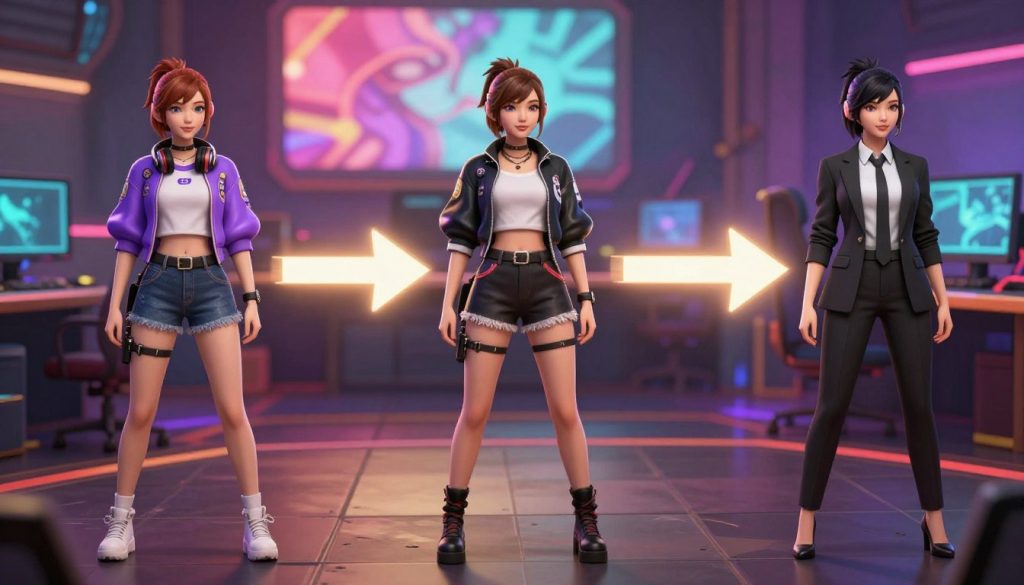
Identifying Optimal Points for Outfit Changes
To make an outfit change look seamless, find natural pauses or motion peaks. Changing outfits during a character’s movement or a quick camera pan can hide small issues. Strategic placement keeps the viewer’s focus on the action, not the technical change.
Don’t change outfits in still shots where the background is steady. Instead, look for moments when the character moves or gestures. These high-energy frames are perfect for a smooth keyframe prompt swap.
Using Keyframe Curves for Gradual Blending
Using keyframe curves can make your transitions look more natural. By adjusting how frames blend, you create a smooth transition. This gradual blending avoids the sudden visual jumps that can ruin a sequence.
Try different easing functions to see their impact. A smooth curve makes the outfit change feel natural. Consistency in your curves is crucial for professional-quality content.
Managing Transition Speed and Timing
Your animation’s rhythm should match the music or story pacing. If the keyframe prompt fires too fast, it might look like a glitch. On the other hand, a slow transition can make the character look distorted or blurry.
Experiment with frame offsets to find the right timing for your project. When you get it right, your pokimane ai wardrobe transitions will feel intentional and polished. Remember, timing is everything to keep your audience engaged.
Implementing Prompt Switches for Seamless Outfit Changes
For a smooth outfit change, you need to control your animation prompts well. Learning the technical syntax lets you change clothes styles easily. This is done by using a keyframe prompt to tell the AI when to change the visuals.
Structuring Your Prompt Syntax for Mid-Animation Swaps
To make a smooth transition, organize your prompts well. Keep the character’s base description the same but change the clothes at set times. Consistency helps the AI keep the character’s look right during the change.
Using Prompt Scheduling to Trigger Wardrobe Shifts
Prompt scheduling lets you set the exact frame for the new style to start. By linking your keyframe prompt to the timeline, you can make animations feel natural. This avoids the sudden visual changes that can ruin an animation.
- Clearly define your start and end frames in the config file.
- Use gradual transition tokens to mix the old and new styles smoothly.
- Test your sequence in short parts before making the full video.
Balancing Prompt Weights During the Transition
It’s important to balance the prompt weights to avoid the AI over-generating or losing details during the change. If the new outfit change weight is too high, the model might struggle to keep the character’s shape. Adjust these values slowly to get a smooth, professional look.
Always watch how your tokens affect the output to keep it stable. By managing these variables carefully, you make sure every transition looks planned and polished. This skill is what makes professional animations stand out from amateur ones.
Synchronizing Wardrobe Shifts with Motion Dynamics
For a smooth wardrobe transition, you need more than just changing clothes. It’s about matching the timing with your character’s movements. This way, the change blends in seamlessly, making it look natural.
Matching Outfit Changes to Character Movement
The best time for a wardrobe transition is during energetic actions. Try changing clothes during a spin, jump, or quick turn. This distracts the viewer, making the change less noticeable.
Look for the moment when the character’s shape is hidden the most. This strategic placement helps the AI create a seamless change. Fast movements help hide any small differences in the new outfit.
Utilizing Motion Vectors to Mask Transitions
Motion vectors guide the AI in how pixels move. By adjusting these vectors, the wardrobe transition follows the character’s path. This keeps the scene looking consistent while changing clothes.
Using motion vectors also prevents the “ghosting” effect. It ensures the transition looks natural. Consistency is key, and motion data helps achieve this.
Adjusting Frame Rates for Fluidity
The animation’s frame rate affects how smooth the change looks. A higher frame rate gives the AI more data for smooth transitions. If the transition seems choppy, try increasing the frame rate for better results.
| Motion Type | Transition Difficulty | Recommended Masking | Visual Impact |
|---|---|---|---|
| Rapid Spin | Low | Motion Blur | High |
| Walking Cycle | Medium | Frame Blending | Moderate |
| Static Pose | High | Cross-Dissolve | Subtle |
By tweaking these technical aspects, you can make your transitions look professional. Always test your timing to keep the wardrobe transition invisible to the viewer.
Advanced Techniques for Maintaining Character Consistency
Keeping a character’s identity stable with outfit changes needs a precise mix of control and facial care. When exploring AI video, making sure your character looks the same in every outfit is key.
Applying ControlNet for Structural Stability
ControlNet is the core of your animation, keeping the character’s pose and shape steady. It uses depth maps or OpenPose models to keep the physical structure firm, even with big changes in clothing texture.
This stops the character’s body from warping or changing shape during transitions. Start applying these controls early to set a strong base for the AI’s work.
Using IP-Adapter to Preserve Facial Features
While ControlNet focuses on the body, IP-Adapter locks in the face. It lets the AI use a specific image, keeping facial expressions and features the same across frames.
Using a high-quality reference image in the IP-Adapter reduces the chance of the character looking different after a wardrobe change. This ensures seamless visual continuity, keeping your audience focused on the story, not technical issues.
Managing Lighting Shifts During Wardrobe Changes
Lighting changes with outfit swaps, which can disrupt the scene’s feel. To keep the scene cohesive, match the light sources between the original and new outfits.
Adjusting prompt weights to include lighting details helps the AI keep the environment consistent. You can also use post-processing masks to smooth out where clothing meets the background, ensuring perfect shadows and highlights.
| Tool | Primary Function | Consistency Impact |
|---|---|---|
| ControlNet | Structural Pose | High (Prevents warping) |
| IP-Adapter | Facial Identity | High (Preserves likeness) |
| Prompt Weighting | Lighting/Style | Medium (Ensures cohesion) |
Troubleshooting Common Glitches During Outfit Swaps
Even the most polished animation projects can hit a snag when you attempt a complex outfit change. Your setup might seem perfect, but the generative process often introduces unexpected visual errors. These require a systematic approach to fix. By identifying these issues early, you can maintain the high quality of your final render.
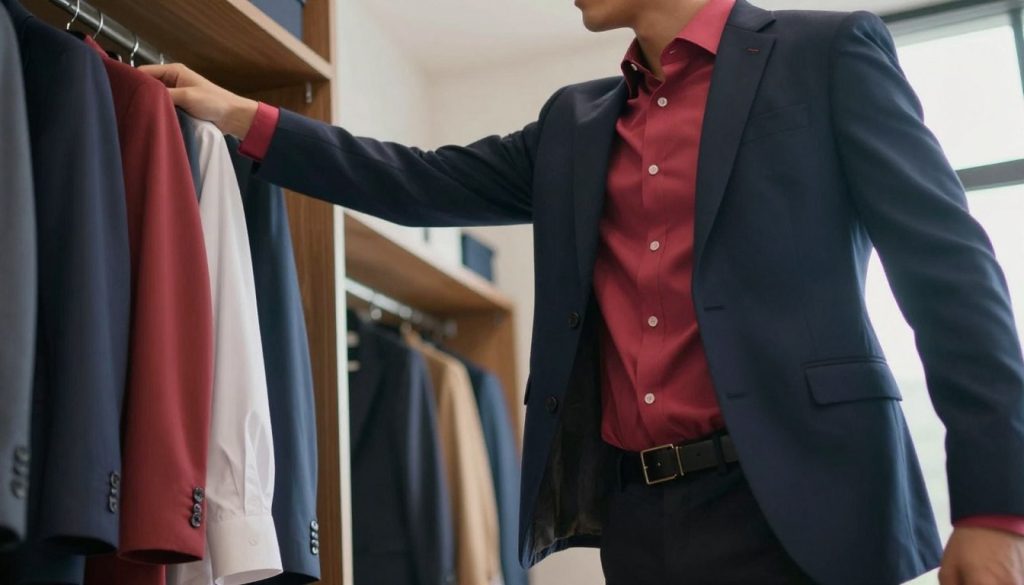
Fixing Morphing Artifacts and Distortion
Morphing artifacts often appear when the AI tries to bridge the gap between two vastly different clothing structures. If your character looks like they are melting during an outfit change, you likely need to adjust your denoising strength. Lowering this value helps the model retain more structural integrity from your base frames.
Also, check your keyframe placement to ensure the transition happens over enough frames. If the swap occurs too quickly, the AI lacks the temporal data to blend the pixels smoothly. Consider these quick fixes for better stability:
- Reduce the denoising strength in your configuration settings.
- Increase the number of frames allocated for the transition.
- Use ControlNet to lock the character’s pose during the swap.
Correcting Color Bleeding Between Outfits
Color bleeding occurs when the AI carries over color data from the previous garment into the new one. This often happens because the prompt weights for the new outfit are not strong enough to override the previous visual context. To fix this, you must refine your prompt syntax to emphasize the new colors clearly.
Try adjusting your prompt weights by adding more emphasis to the specific colors of the new clothing. If the issue persists, verify that your denoising settings are not too high, as excessive noise can cause colors to bleed across frame boundaries. Precision in your prompt scheduling is the best way to ensure a clean visual break.
Resolving Prompt Conflict Issues
Prompt conflict happens when the AI receives contradictory instructions during an outfit change. This usually occurs when your prompt contains too many overlapping style descriptors that confuse the generative model. You can resolve this by simplifying your prompt syntax during the transition phase.
Ensure that your prompt scheduling is set to trigger the new outfit description exactly when the transition begins. If the AI continues to struggle, try using a “negative prompt” to explicitly exclude the colors or styles of the previous outfit. Clear and concise instructions will always yield better results than overly complex prompt strings.
Optimizing Render Settings for High-Quality Transitions
To get top-notch AI animation, you need to find the right mix of tech settings and creative ideas. When you’re working on complex wardrobe changes, your computer and software setup are crucial. Fine-tuning these settings helps keep your character looking consistent while the clothes move smoothly.
Selecting the Right Samplers and Steps
The type of sampler you choose affects how fast and clear your animation frames are. For most wardrobe changes, DPM++ 2M Karras or Euler a are good choices. Aim for 20 to 30 sampling steps to keep things stable and clear.
If you see flickering, try adding a few more steps. But remember, more steps mean longer render times. Finding the sweet spot for your model is key to smooth visuals.
Utilizing Upscalers for Final Polish
After you’ve made your base frames, upscaling is the last step for a sharp, pro look. Upscalers like ESRGAN or R-ESRGAN 4x+ bring back fine details lost in the first step. They’re great for making clothing textures look smooth.
Use a light denoise strength during upscaling to avoid adding new details. You want to enhance what’s there, not change the character’s look. This final polish makes your transitions look like they were made for a big budget.
Managing Batch Processing for Long Sequences
Working on long animation sequences can use up a lot of VRAM if not managed. Break your project into smaller parts to avoid running out of memory. This way, you can keep an eye on each part and make changes as needed.
Using a batch manager or script can make the process easier and keep your system cool. Always clear your cache between batches to keep things running smoothly. Proper management is the key to making long videos without system crashes.
| Configuration | Sampler Choice | Recommended Steps | Upscaler Utility |
|---|---|---|---|
| Fast Preview | Euler a | 15-20 | None |
| Balanced Quality | DPM++ 2M Karras | 25-30 | ESRGAN |
| High Fidelity | UniPC | 35-40 | R-ESRGAN 4x+ |
Refining the Visual Flow Between Different Styles
The difference between a hobbyist edit and a high-end production often lies in how you handle your wardrobe transition. Achieving a professional look requires more than just swapping images. It demands a careful balance of timing and visual harmony. When you refine the flow, you ensure that the viewer remains immersed in the narrative rather than distracted by sudden jumps.
Blending Contrasting Fashion Aesthetics
Moving from casual streetwear to high-fashion evening gowns presents a unique challenge for AI models. You must bridge the gap between these styles by using intermediate frames that share color palettes or textures. Consistency in lighting is the secret to making these drastic shifts feel natural and intentional.
“True visual storytelling is found in the details of the movement, where the transition becomes as important as the subject itself.”
Using Masking to Isolate Wardrobe Areas
Masking allows you to exert precise control over which parts of the character change during the wardrobe transition. By isolating the clothing from the background, you prevent unwanted morphing of the face or environment. This technique ensures that your character remains stable while the outfit evolves dynamically.
You can apply soft-edged masks to blend the new outfit into the existing frame. This prevents harsh lines and creates a seamless integration that looks polished. Using these tools effectively will elevate the quality of your final output significantly.
Layering Effects for Professional Transitions
Layering post-processing filters and light leaks helps tie the entire sequence together into a cohesive product. These effects act as a bridge, masking minor imperfections that occur during the generation process. A well-executed wardrobe transition often relies on these subtle additions to hide frame-to-frame inconsistencies.
| Technique | Primary Benefit | Complexity Level |
|---|---|---|
| Masking | Structural Control | High |
| Color Grading | Visual Cohesion | Medium |
| Motion Blur | Fluidity | Low |
By combining these methods, you create a professional wardrobe transition that stands out in a crowded digital space. Always remember that the goal is to maintain the viewer’s focus on the character’s transformation. With practice, these refined techniques will become second nature to your editing workflow.
Creative Applications for Dynamic Wardrobe Effects
Once you get the hang of the technical stuff, you can really get creative with AI. You can make stories come alive with your wardrobe changes. Innovation in video production happens when you push past what’s possible.
Designing Themed Outfit Sequences
Plan your outfit changes to tell a story. You could go from a simple office look to a bold cyberpunk style. The key is to keep the colors and textures consistent. This makes each change feel like a part of a bigger picture.
Group your outfits by mood or era to keep things flowing. This helps the AI understand your theme. Thematic unity makes your video look professional, not just a bunch of clips.
Creating Narrative-Driven Wardrobe Changes
Wardrobe changes can show a character’s growth or change in mood. A small change in clothes can tell a big story. Every stitch and fabric choice can add depth to your video.
“The most powerful stories are told not just through words, but through the visual evolution of the characters we follow.”
Think about how lighting and background fit with your character’s new look. When the clothes match the story’s tension, it pulls the viewer in. Strategic timing makes these moments stand out.
Experimenting with Abstract Transition Styles
Try new things by moving away from normal transitions. You can make outfits blend into shapes or patterns before changing again. These avant-garde techniques make your video unique and challenge the viewer.
Don’t be afraid to break the rules for a more artistic look. Use effects and keyframes in creative ways. Creative experimentation sets your work apart in a crowded field.
Conclusion
Making smooth wardrobe changes needs both skill and creativity. You now know how to use keyframes and switches in Stable Diffusion or ComfyUI.
These tools help you explore new ways to tell stories digitally. Your fashion sense grows as you try out different settings and workflows.
Being consistent is key in your animation journey. Regular practice helps you improve your character models and timing of outfit changes.
You can create content that grabs people’s attention. Start using these techniques in your work today. See how your style grows. Your audience is waiting for your next creation.
FAQ
What exactly is an AI-driven wardrobe transition?
A wardrobe transition is when a character’s clothes change smoothly in a video. This is made possible by AI animation tools. It looks like the character is wearing a new outfit without actually changing clothes.
How do I use a keyframe prompt to trigger an outfit change?
To use a keyframe prompt, you need to schedule it in your AI workflow. This lets you tell the AI to change the character’s clothes at specific points. It makes the outfit change look smooth and professional.
Which software is best for refining these transitions?
For creating the initial animation, Stable Diffusion and ComfyUI are great. But for fine-tuning, use Wondershare Filmora. It helps you add effects and adjust timing for a perfect transition.
How can I maintain character consistency during a rapid wardrobe transition?
To keep the character looking the same, use LoRA models. Also, ControlNet and IP-Adapter help keep the character’s face and body right while changing clothes.
What is the role of temporal consistency in AI video editing?
Temporal consistency keeps the video looking smooth. It prevents the video from looking like it’s flickering. This is crucial for the new clothes to look like they’re part of the character’s body.
How do I fix morphing artifacts that occur during a transition?
Morphing artifacts happen when the transition is too fast. Adjusting motion vectors and using masks can help. This keeps the character and background looking right during the change.
Can I perform a wardrobe transition with high-resolution 4K footage?
Yes, but it needs careful VRAM management. It’s best to render at a lower resolution first. Then, use an AI Upscaler or Wondershare Filmora to get the 4K quality without losing detail.
Why is prompt scheduling important for smooth visual shifts?
Prompt scheduling lets you control when the AI introduces new outfit elements. It allows for a gradual change, making the transition look professional and smooth.