Pokimane AI Porn Generator 101: Master the Streamer Fantasy Workflow
Ever thought about how digital artists make your favorite internet stars look so real? It’s not just about having a fast computer. It’s about knowing how to use your tools well and understanding what you want to create.
Getting good at digital art means learning the right tools. Whether you’re playing with a pokimane ai porn generator or other software, it’s all about making your ideas clear and managing your work well.
This guide will show you how to use these advanced tools. By focusing on quality and control, you can make your projects look like they were done by a pro. Let’s get started on making your own streamer fantasy.
Key Takeaways
- Understand the core technical requirements for high-quality image synthesis.
- Learn how to refine your creative prompts for better artistic results.
- Discover the importance of precision when using modern digital tools.
- Master the workflow necessary to produce consistent and stylized imagery.
- Gain insights into navigating complex software interfaces with confidence.
Understanding the Technology Behind AI Image Generation
Before you start making streamer-inspired images, it’s key to know how they work. AI image generation uses complex math to turn text into pictures. Learning this tech lets you control your creations and get the look you want.
How Diffusion Models Work
Diffusion models are at the core of this tech. They learn to undo a process of making images worse. First, they’re trained on lots of images that get more and more distorted.
Then, they figure out how to make images better. They start with random noise and remove it to create clear images. Your text prompt guides this process, helping the AI create what you want.
The Role of Stable Diffusion in Fan Art
Stable Diffusion is a top choice for digital artists because it’s open-source and flexible. You can use it on your own computer, keeping your work private. This lets you tweak every detail of your creations.
For fan art lovers, Stable Diffusion is a game-changer. It lets you fine-tune the model to match your favorite streamer’s style. Learning to use it well is the first step to bringing your ideas to life.
Setting Up Your Hardware and Software Environment
A solid technical foundation is key for a smooth beginner workflow. Before starting, make sure your computer can handle the complex tasks of local processing.
Minimum GPU Requirements for Local Generation
Your graphics card is crucial. Like high-end gaming, AI generation needs Video RAM (VRAM) to work fast.
For a stable experience, use an NVIDIA GPU with at least 8GB of VRAM. Less memory can cause slowdowns, especially with big models or high-resolution images.
Installing Automatic1111 WebUI
The Automatic1111 WebUI is your main tool for creative tasks. It makes the beginner workflow easier with a simple dashboard for settings.
To start, install Python and Git. Then, clone the GitHub repository and run the web-user batch file. This will open the interface in your browser.
Managing Model Checkpoints and LoRAs
Keeping your workspace tidy is important for success. Store model checkpoints in the “models/Stable-diffusion” folder. This makes it easy for the software to find them.
Also, keep LoRA files in the “models/Lora” directory. This keeps your beginner workflow organized. Proper file management helps you switch between styles easily without technical issues.
Navigating the Pokimane AI Porn Generator Workflow
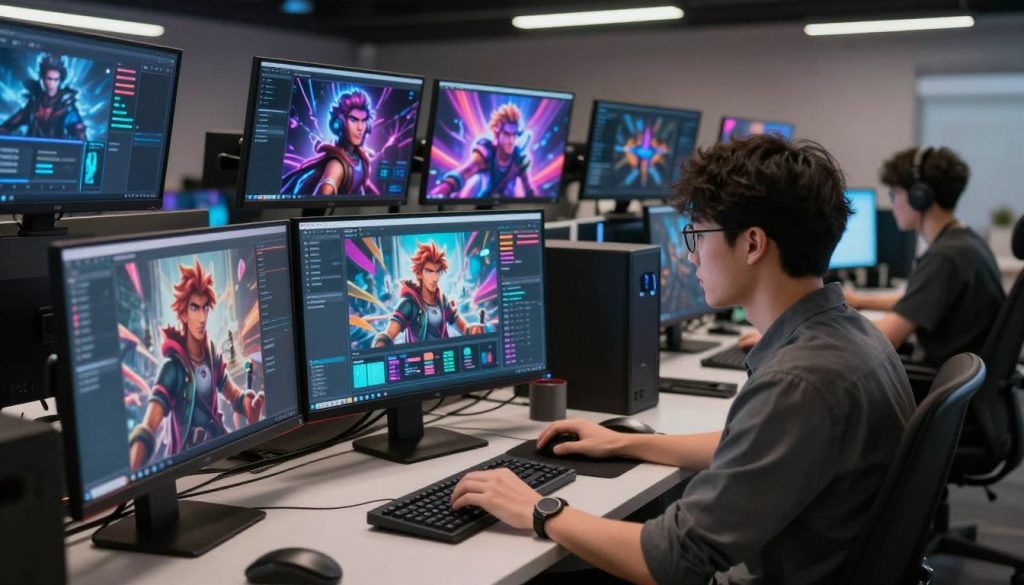
Creating high-quality images starts with a solid beginner workflow. When using the pokimane ai porn generator, being consistent is key. A clear process helps avoid mistakes and ensures your images look great.
Selecting the Right Base Model
The base model you pick is crucial. Look for ones trained on photorealistic or anime-style images, depending on what you want. It’s important to find a model that gets the details right, like facial features and hair colors.
Try out different models to see which one works best with lighting and skin textures. Model selection is the first step to quality. If the model isn’t trained well, no tweaks can fix the image.
Configuring Sampling Steps and CFG Scale
How well the AI follows your instructions depends on technical settings. The sampling steps control how many times the model refines the image. Aim for 20 to 30 steps for top-notch results.
The CFG scale affects how closely the AI sticks to your prompt. A value between 7 and 9 is ideal for creativity and accuracy. Too high, and you might see color issues or texture problems.
| Setting | Recommended Range | Impact on Image |
|---|---|---|
| Sampling Steps | 20 – 30 | Higher values increase detail |
| CFG Scale | 7.0 – 9.0 | Controls prompt strictness |
| Denoising Strength | 0.4 – 0.6 | Affects image variation |
Utilizing Negative Prompts for Better Results
Negative prompts help remove unwanted details from AI images. Include terms like bad anatomy, extra fingers, and blurry textures to get a clean image. This step makes your work look professional.
Keeping a list of negative keywords makes your beginner workflow smoother. It lets you focus on creativity, not fixing errors. A good negative prompt list is a sign of a skilled user of any pokimane ai porn generator.
Mastering Prompt Engineering for Streamer Aesthetics
This streamer aesthetic guide helps you improve your visual style. You’ll learn to turn your ideas into detailed instructions. This way, you control the look of your images.
Deconstructing the Streamer Look
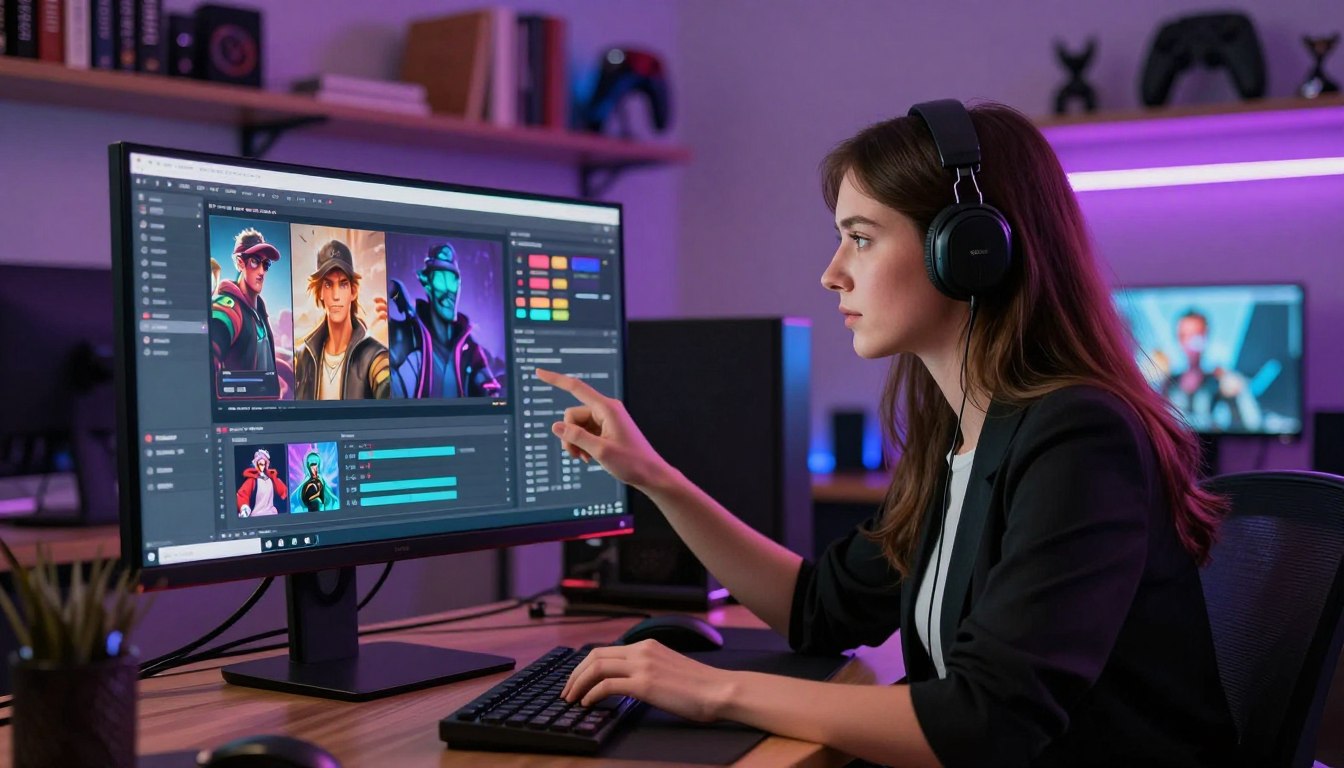
The streamer look is all about certain details. Think vibrant RGB lighting, top-notch gaming gear, and a cozy, messy background. These elements help the AI get your broadcast setup right.
When writing your prompts, use specific words like “gaming headset,” “mechanical keyboard,” and “soft neon ambient light.” These words help place your character in a familiar setting. Being consistent in these details makes your image stand out.
Using Keywords for Lighting and Camera Angles
Lighting is key to a professional look. Use terms like cinematic lighting, “rim lighting,” or “volumetric fog” to add depth. These words help the model create better shadows and highlights.
Camera angles also matter a lot. Using words like “wide-angle lens,” “depth of field,” or “eye-level shot” changes how your image looks. Try different angles to make your visuals dynamic and engaging.
Balancing Realism with Stylized Elements
It’s important to mix realism with stylized art. Use technical terms like “8k resolution” or “highly detailed skin texture” with artistic words like “digital painting style” or “anime-inspired aesthetic.” This mix makes your content eye-catching and personal.
| Modifier Category | Realism Focus | Stylized Focus |
|---|---|---|
| Lighting | Natural sunlight | Neon RGB glow |
| Camera | Portrait photography | Dynamic anime angle |
| Texture | Hyper-realistic skin | Cel-shaded finish |
| Environment | Minimalist studio | Futuristic gaming room |
By following this streamer aesthetic guide, you can tweak your prompts to get the look you want. Even small changes in your keywords can make a big difference. Keep trying to find your own visual style.
Refining Image Quality with Upscaling and Post-Processing
Once your base image is ready, the real magic happens during the refinement phase. Initial generations provide a solid foundation but often lack sharpness and structural integrity. Advanced post-processing workflows can significantly elevate your output.
Applying Hires Fix for Detail Enhancement
The Hires Fix feature is key for overcoming resolution limitations. It generates an image at a lower resolution and then upscales it to add fine details. This prevents distorted anatomy that can happen when trying to generate high-resolution images from scratch.
To get the best results, adjust the denoising strength carefully. A setting between 0.4 and 0.6 usually works best. If the value is too high, the image may deviate from your initial prompt.
Using ControlNet for Pose Consistency
Maintaining a specific pose across multiple iterations can be challenging. ControlNet acts as a structural anchor, allowing you to lock in specific poses or compositions. By using a reference image or a skeleton map, you ensure that your subject remains in the desired position.
This tool is essential for experimenting with different outfits or lighting styles while keeping the character’s stance identical. It effectively removes the randomness that often plagues iterative generation. Your workflow becomes much more predictable and efficient with this integration.
Final Touches with Inpainting and Outpainting
Sometimes, an image is nearly perfect but needs minor corrections. Inpainting allows you to mask a small portion of the image and regenerate only that section. This is ideal for fixing hands, facial features, or background artifacts without altering the entire composition.
Conversely, outpainting lets you expand the canvas beyond the original borders. This technique is useful if you need to change the aspect ratio or add more context to the scene. Together, these tools provide the final polish needed for a professional look.
| Tool | Primary Function | Best Use Case |
|---|---|---|
| Hires Fix | Detail Enhancement | Increasing resolution and clarity |
| ControlNet | Pose Consistency | Locking character stance and structure |
| Inpainting | Localized Editing | Fixing specific anatomy or artifacts |
| Outpainting | Canvas Expansion | Adjusting aspect ratio and background |
Ethical Considerations and Responsible Content Creation
When you create digital content with real people, you must follow strict ethical rules. It’s important to respect the rights and privacy of those in your work. Responsible creation is key to a positive online image.
Understanding Platform Terms of Service
Every online platform has its own rules for content. You need to know these rules to stay legal and in good standing. Breaking these rules can get you in big trouble, like losing your account.
Look at YouTube’s actions. They’ve taken down hundreds of thousands of videos for safety reasons. Always check for updates on your favorite platforms to avoid trouble.
Respecting Digital Privacy and Consent
Privacy and consent are crucial when using real people in your content. Using someone’s image without permission can cause big problems. Always think about these points before sharing your work:
- Prioritize Consent: Make sure the person in your content has given you permission.
- Avoid Deception: Don’t make people think someone said or did something they didn’t.
- Protect Dignity: Don’t create content that could harm someone’s reputation or dignity.
Navigating Community Guidelines
Community guidelines help keep online spaces safe. They change with new tech, like AI. Staying up-to-date helps avoid trouble with automated systems.
To keep a good image, be open and accountable. If you’re not sure about a project, it’s safer to be cautious. Building a reputation for integrity is more valuable than quick fame from questionable content.
Troubleshooting Common Generation Errors
Technical bugs are a normal part of making things, like software developers face. Even with the best prompt, your setup might still have unexpected issues. These need a little manual help to fix.
“The most sophisticated tools are only as effective as the user’s ability to diagnose and resolve the inevitable glitches that arise during complex workflows.”
Knowing how to fix these problems keeps your work looking professional. By tackling these common issues, you keep your creative process smooth and efficient.
Fixing Distorted Anatomy and Artifacts
When models struggle with poses, limbs or faces might look wrong. You can fix this by adjusting your negative prompts to include words like “extra fingers,” “deformed,” or “bad anatomy.”
If it still doesn’t work, try lowering your CFG scale. A high CFG scale can make the model overthink your prompt, causing unnatural visual artifacts. Lowering it lets the model create more realistic human shapes.
Resolving Out-of-Memory Errors
Running local generation software can be hard on your computer, leading to out-of-memory errors. These crashes happen when your GPU VRAM is full during rendering.
To solve this, try making your batch size smaller or lower the image resolution. You can also use –medvram or –lowvram command-line arguments to better manage memory.
Correcting Color Bleeding and Texture Issues
Color bleeding shows up as unwanted colors in wrong places. This usually means your VAE (Variational Autoencoder) is not set up right or missing from your model folder.
Make sure you have a good VAE file loaded for accurate color and sharp textures. If textures look muddy, adjust your denoising strength to add back details without noise.
Advanced Techniques for Customizing Streamer Fantasies
To get truly unique results, you need to go beyond basic prompts. Advanced techniques give you greater control over your creations. This way, your work will stand out from the usual.
Training Custom LoRAs for Specific Outfits
Creating a custom LoRA is the best way to capture specific outfits or traits. You’ll need a set of high-quality images to teach the model. Consistency is key when preparing your data.
With your dataset ready, start the training process on your local hardware. This lets you fine-tune the model to match the streamer’s style or a specific costume. Custom LoRAs are like a special plugin for your model, making future generations easier.
Blending Multiple Styles for Unique Visuals
Blending styles lets you create visuals that break the mold. You can do this by mixing different model checkpoints or adjusting weights in your prompts. This way, you can combine various artistic influences into one image.
Try different model weights to find new looks. Mixing realistic and stylized models can create a unique look that’s hard to achieve otherwise. Keep track of your best blends for future projects.
Automating Batch Generations
Automating your workflow saves time and boosts productivity. By using batch generation scripts, you can create many variations at once. This is great for testing different prompts or seed values.
Most modern tools let you set up a list of prompts and settings to process one after another. Batch processing means you have lots of options without constantly watching the screen. This makes your creative process efficient and streamlined.
Optimizing Your Workflow for Efficiency
Efficiency is key for creators wanting to excel in their digital work. By improving your technical skills, you can save time on file management. This streamer aesthetic guide helps you keep your production quality high.
Creating Prompt Templates
Starting from scratch is unnecessary when you have a good formula. Building a set of prompt templates lets you quickly recreate successful styles. Consistency is crucial for maintaining a consistent look in your images.
Keep your best prompts in a text file or snippet manager. This keeps your aesthetic consistent while you try new things. Using these templates is a key part of any streamer aesthetic guide.
Organizing Your Output Folders
As your collection grows, finding files can slow you down. Set up a clear folder structure to keep your work easy to find. Organize by date, project name, or model version.
- Root Folder: Main project directory.
- Sub-folders: Categorized by character or outfit.
- Archive: Older generations that are no longer in active use.
Streamlining the Iteration Process
To get to your goal faster, work in small batches. This method helps you fine-tune your work without wasting resources.
The table below shows how to manage your workflow for better productivity:
| Workflow Stage | Primary Goal | Efficiency Tip |
|---|---|---|
| Prompting | Define style | Use saved templates |
| Generation | Create assets | Batch small sets |
| Organization | File management | Sort by date |
| Refinement | Final polish | Use Hires Fix |
By following this streamer aesthetic guide, your creative process will improve. Organization and preparation are essential for professional results.
Conclusion
Creating top-notch images needs both technical know-how and creative flair. You now have the basics to work with tools like Stable Diffusion and Automatic1111.
Creating engaging content for streamers means practicing a lot. Every new generation lets you get better at writing prompts and improving your images. Keep learning as new software and models come out.
It’s also important to act ethically in your work. Always respect privacy and follow rules to keep your content good and professional. Use your skills to explore new limits while being responsible.
Don’t stop trying new things to make your style stand out. Your ability to evolve will make your AI art unique. Share your journey and keep exploring the endless possibilities of these tools.
FAQ
What is the primary focus of a beginner workflow for a pokimane ai porn generator?
Your beginner workflow starts with setting up your hardware and software. Make sure your NVIDIA GPU has enough VRAM for local processing. Then, install the Automatic1111 WebUI.
Organize your Checkpoints and LoRAs early. This helps keep your workspace efficient as you start making content.
How do diffusion models like Stable Diffusion create fan art?
A: Stable Diffusion works by removing noise from an image. It uses your text prompts to create an image that looks like Pokimane. This process is faster than traditional digital painting.
What are the minimum hardware requirements to run these AI tools locally?
You need an NVIDIA GeForce RTX card with at least 8GB of VRAM. Integrated graphics or older cards might work with tweaks. But, a modern GPU is key to avoid Out-of-Memory (OOM) errors.
How can I achieve a realistic look using a streamer aesthetic guide?
Use specific keywords in your prompts for lighting and camera gear. Include terms like “ring light” and “4k webcam quality.” This helps create a professional studio look.
Balance these with realism-focused Checkpoints to make your output look real.
Why are negative prompts vital for generating high-quality AI images?
Negative prompts tell the Automatic1111 interface what to avoid. Use terms like “distorted anatomy” to steer clear of common issues. This leads to cleaner images that need less Inpainting.
What should I do if my generated images have distorted anatomy or artifacts?
Use Hires. fix or ControlNet to fix anatomy issues during generation. If the image is already made, use Inpainting to fix it. Increase the denoising strength until it looks natural.
How do I handle digital privacy and ethical concerns in content creation?
Always respect digital privacy and consent. Learn the Terms of Service of platforms like Civitai and Patreon. Follow community guidelines to stay legal and respectful.
What is the benefit of training custom LoRAs for streamer-themed content?
Custom LoRA captures specific details like a streamer’s gaming headset. This technique offers high customization for Pokimane-themed projects. It ensures consistent visuals across generations.
How can I resolve Out-of-Memory (OOM) errors during generation?
To fix out-of-memory errors, lower your sampling steps or image resolution. Edit your webui-user.bat file for better hardware use. Closing apps like Google Chrome can also help.
What is the best way to optimize a repetitive generation workflow?
Efficiency is key. Create prompt templates for your favorite styles. Use the Styles save feature in Automatic1111.
Organize your output folders and use Batch Generation. This streamlines your creative process.