Touch Realism: Prompting Hand Placement & Sensory Feedback
Ever felt like virtual interactions are missing something real? The gap between digital worlds and our senses is big. It’s all about how we feel things through touch.
To make digital interactions feel real, we need to get the digital hand placement right. When virtual things match our natural movements, our brains accept them as real.
This guide will dive into the basics of pokimane ai touch realism. It’s all about making your projects better. By learning these tips, you can make your designs more engaging and real for your users.
Key Takeaways
- Understand the vital role of sensory feedback in virtual environments.
- Learn how to align digital hand placement with human biomechanics.
- Discover methods to improve user immersion through tactile simulation.
- Explore the foundational principles of touch realism for modern developers.
- Gain actionable insights to enhance the quality of your interactive assets.
Foundations of Pokimane AI Touch Realism
To connect virtually, you need to understand the basics of touch simulation. Pokimane AI touch realism is built on the computational motor control theory. This theory, developed by David Marr, divides complex movements into three parts.
- Physical Level: The hardware and mechanical limits of the interface.
- Algorithmic Level: The math that processes input data.
- Computational Level: The logic that guides the interaction’s purpose.
Defining Tactile Simulation in AI
Tactile simulation goes beyond just seeing things; it’s about feeling them. By using these levels, developers can make experiences feel real. With pokimane AI touch realism, machines learn to understand pressure, texture, and resistance.
The Role of Sensory Feedback in Digital Interaction
Sensory feedback is key in digital interactions. It connects the motor control loop, making interactions feel real. Effective feedback lets the system adjust based on your movements.
By closing this loop, AI responds accurately. This makes digital interactions feel like touching real objects. To master pokimane AI touch realism, you must understand how feedback shapes user experience.
Preparing Your Environment for Realistic Prompting
To master the art of sensory simulation, you must first optimize your hardware and software environment. The global market for haptics is expanding rapidly. It’s expected to exceed $19 billion by 2025. This growth shows the demand for digital experiences that feel real.
Selecting the Right AI Model for Haptic Fidelity
Choosing the correct AI model is crucial for your project. You need a system that supports high-resolution data processing. This ensures every interaction feels authentic.
Look for platforms that offer robust integration with sensory feedback hardware. When your software communicates well with your devices, you get a realistic feel. Always choose models that allow for detailed control over output variables.
Configuring Parameters for Precision
Once your model is selected, fine-tune your settings for high precision. Adjusting your parameters keeps the haptics consistent. Small tweaks can prevent errors and improve your simulation.
The following table outlines the essential requirements for maintaining a professional-grade environment for your projects:
| Component | Recommended Spec | Purpose |
|---|---|---|
| Processing Power | High-End GPU | Real-time rendering |
| Software Suite | Haptic-Ready API | Data synchronization |
| Input Latency | Below 10ms | pokimane ai touch realism |
| Calibration | Automated | Consistency |
By maintaining these standards, you create a stable foundation for your work. Proper environment setup is the first step toward achieving professional-grade sensory simulation. This will help you stand out in a competitive digital landscape.
Mastering Hand Placement Mechanics
To truly master touch realism, you must first bridge the gap between your physical movements and digital representations. This process relies on three core pillars: your sense of embodiment, your sense of agency, and your sense of presence. When these elements align, the virtual environment feels like a natural extension of your own body.
“The mind is a powerful tool that can bridge the divide between the physical and the digital if the sensory feedback is consistent,” suggests a leading expert in human-computer interaction.
Anatomical Accuracy in AI Generation
Achieving high-fidelity results requires the AI to respect the biological constraints of the human hand. If the geometry of the fingers or the wrist is slightly off, your brain immediately rejects the illusion of touch realism. You should prioritize models that understand skeletal constraints to ensure that every gesture looks and feels authentic.
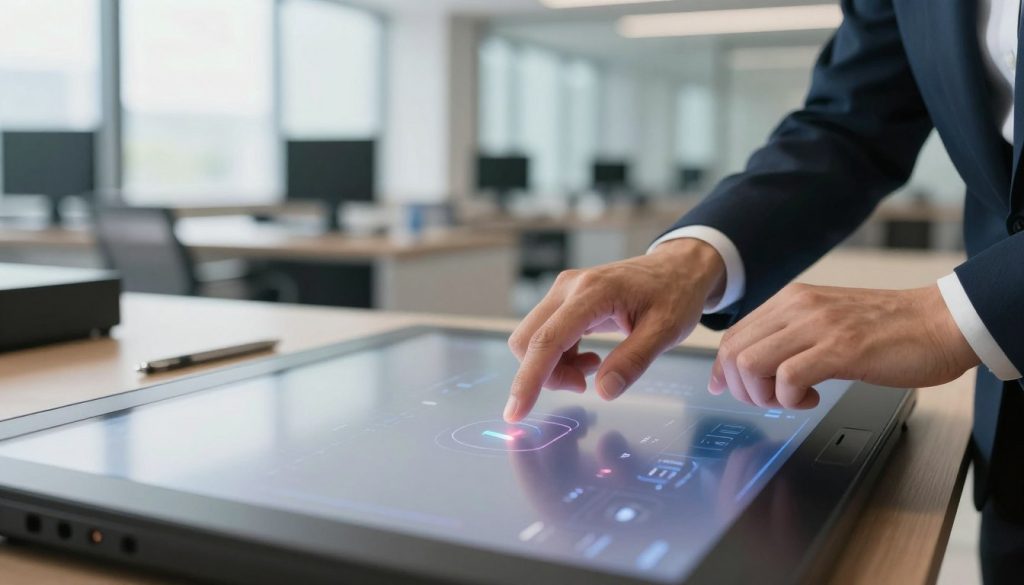
When the AI generates hands with proper anatomical proportions, it reduces the cognitive load on the user. This allows you to focus on the task at hand rather than correcting visual glitches. Consistency in bone structure is the secret to making virtual interactions feel intuitive and grounded in reality.
Spatial Awareness and Depth Perception
Your brain relies on proprioception to understand where your limbs are in space without looking at them. In a virtual setting, the AI must mirror this by maintaining strict spatial awareness. If the virtual hand does not match your expected depth, the sense of touch realism quickly dissolves, leading to frustration.
You can enhance this experience by fine-tuning the depth perception parameters within your generation workflow. Precise calibration ensures that when you reach out to touch an object, the virtual contact point aligns perfectly with your physical intent. By minimizing these spatial discrepancies, you create a seamless loop of interaction that feels entirely natural.
Crafting Prompts for Tactile Cues
You can make virtual visuals feel real by using special prompt techniques. When you match what you see with what you feel, it creates a strong sense of touch realism. This makes the digital world feel more real.
This idea is like the rubber hand illusion. It tricks your brain into thinking a fake object is part of your body. This happens when what you see and feel match up.
Descriptive Language for Texture and Pressure
To create good tactile cues, you need to be specific. Use words like “gritty,” “velvety,” or “firmly resistant.” Being specific is key when teaching an AI to mimic human touch.
Pay attention to how hard or soft the touch is. This makes the experience feel real. By setting the pressure right, you help the AI create a believable touch.
Integrating Material Physics into Your Prompts
Your prompts should include the real-world properties of objects. Adding details like density, friction, and elasticity helps the AI understand how things should feel. This makes your tactile cues feel real and right, even when things move a lot.
Think about how different materials act when pressed. Saying a surface is “yielding” or “rigid” tells the AI how to react. Using physics in your prompts is crucial for a great, immersive experience.
Advanced Techniques for Sensory Feedback
To truly immerse yourself, you need to layer complex sensory data. Going beyond simple vibrations, you can make a convincing digital world that feels real. By adding different tactile cues, your system can mimic the real world closely.
Simulating Temperature and Resistance
Creating a realistic simulation needs a mix of methods. Use vibrotactile feedback for textures and thermal elements for heat or cold. Force control is also key, showing how much an object resists when touched.
When you mix these haptics, you get a rich experience. For example, touching a virtual metal should feel cool and hard. This detail stops your brain from seeing it as just a visual trick.
Layering Sensory Data for Immersive Results
Layering sensory data means syncing different inputs with your visuals. If the timing is wrong, the illusion fails. Keeping all feedback consistent is crucial for realism.
The table below shows how different methods enhance the user experience:
| Haptic Method | Primary Function | User Impact |
|---|---|---|
| Vibrotactile | Surface texture | High detail |
| Thermal | Temperature | Emotional depth |
| Force Control | Resistance | Physical weight |
| Surface Haptics | Friction | Tactile realism |
By balancing these tactile cues well, every touch feels real. Mastering these haptics will make your projects much better. It will give users a truly interactive digital space.
Refining Hand-Object Interaction
When your virtual hand goes through an object, it feels like reality breaks. To keep the illusion alive, your digital world must respect the real world’s rules. You need to be very precise with your movements to make them feel real.
Overcoming Clipping and Collision Issues
Clipping happens when your virtual hand meets an object’s edge. This glitch can ruin the experience. To solve it, use robust collision detection algorithms to stop the hand when it hits an object.
Also, add invisible proxy meshes around objects. This creates a buffer zone. By making these zones more complex, you prevent the hand from going through surfaces. This meticulous approach keeps interactions smooth and believable.
“The secret to digital immersion lies in the subtle resistance provided by the environment. If the user feels the weight of an object, the brain accepts the simulation as reality.”
Achieving Natural Grip and Weight Distribution
A natural grip comes from how your AI model handles pressure. Avoid static poses, as they look robotic. Instead, aim for dynamic weight distribution that changes with the object’s size and weight.
When simulating weight, the hand should move slightly to balance the object. This realism makes the interaction feel more real. Here’s a table with key factors for better grip mechanics:
| Interaction Factor | Primary Goal | Technical Benefit |
|---|---|---|
| Collision Buffers | Prevent Clipping | Increased Visual Stability |
| Pressure Mapping | Natural Grip | Enhanced Tactile Feedback |
| Mass Simulation | Weight Distribution | Improved User Immersion |
Troubleshooting Common Prompting Errors
Fixing your digital setup is key to mastering tactile cues. If your AI doesn’t act naturally, it’s often because of setup or data issues. Finding these problems early keeps your output engaging and quick.
Sensory feedback delays are a big problem, lasting from 50 to 300 ms. These delays make it hard for our brains to keep up. If your system takes too long, users will feel disconnected.
Correcting Distorted Hand Geometry
Distorted hand shapes usually come from bad setup in your prompts. When AI can’t get finger or palm positions right, tactile cues look wrong. Make sure your hand shapes are correct to avoid problems.
To solve these issues, start with simple geometry before adding details. Consistent anatomical modeling is the base for all sensory layers. If the base is wrong, no amount of detail will fix it.
Adjusting Feedback Loops for Better Consistency
Keeping feedback loops stable is crucial to avoid user frustration. When system delays change, visual and physical sensations get out of sync. You need to adjust your software to keep tactile cues within 50–300 ms for smooth interaction.
Testing regularly helps spot where loops go wrong. By tightening settings, you can reduce jitter and make interactions more reliable. Precision is key for a great user experience.
Optimizing Haptics for User Experience
The connection between a flat screen and real interaction is made through haptics. When designing for AI, touch becomes key for user happiness and system success.
Balancing Visual Realism with Sensory Input
To create deep immersion, visuals and touch must match. If an object looks soft, it should feel soft too. This avoids confusion.
When visuals and touch don’t match, the user experience drops. Aim for a design where touch supports what you see. This makes the digital world feel natural and easy to use.
Testing Your Prompts for Real-World Application
Testing thoroughly is crucial to keep your design working in different situations. By mimicking real-life use, you see how haptics affect users.
Studies show good feedback loops make tasks quicker. Focus on testing to improve your prompts. This ensures sensory feedback boosts your app’s usefulness.
Putting users first in haptics makes your project stand out. By focusing on how users feel and react, you make your interface more engaging and effective.
Ethical Considerations in AI Touch Simulation
When creating touch experiences, ethical standards are key. Technology is making the physical and digital worlds closer. How you use sensory feedback is very important.
Creating rules for these interactions keeps your digital spaces safe and respectful. This is important for everyone involved.
Maintaining Boundaries in Digital Interactions
The heart of a good digital experience is clear personal boundaries. When you simulate touch, it feels intimate or private to users. It’s crucial to let users control their touch interactions.
Offer strong settings to turn sensory feedback on or off. This lets users feel in control and comfortable. Remember, the aim is to improve the experience, not to invade their space.
Responsible Use of Sensory Feedback Technology
Good design means thinking about how your tech affects users over time. Make sure the sensory data enhances interactions, not controls them. Being open about how you use touch data builds trust.
Take a privacy-first approach with haptic data. Being transparent lets users trust your projects. Your dedication to ethics will make your digital creations successful and lasting.
Scaling Your Projects with Advanced Workflows
To grow your digital projects, you need to move to more advanced workflows. These workflows should handle complex sensory data well. As your projects get bigger, it’s key to keep every interaction consistent.
Automating Prompt Sequences for Efficiency
Automating repetitive tasks can make your work easier. Using scripting tools cuts down on manual work. This lets you focus more on improving your project’s core.
Automation also keeps your output consistent across big datasets. By setting clear rules for your AI, every interaction feels connected. This is crucial for growing your project without losing quality in your haptics.
Integrating External Haptic Hardware
Today, it’s easier to mix digital prompts with real sensations. Even consumer-grade VR, like the Oculus Rift, is useful for research. By linking these devices to your software, users feel more connected to your virtual world.
Adding external hardware needs a good grasp of software and sensor communication. Keeping latency low is key for an immersive experience. Proper setup of your haptics hardware makes your project feel more real.
| Scaling Method | Primary Benefit | Complexity Level |
|---|---|---|
| Prompt Automation | Increased Speed | Moderate |
| VR Hardware Integration | Enhanced Realism | High |
| Sensor Calibration | Improved haptics | Low |
Conclusion
You now know how to make digital things feel real. By learning about hand placement and feeling, you can make digital spaces feel alive.
Your work in AI-driven touch simulation is all about balance. It’s about making things look good and feel real. This way, you can make digital projects more engaging. You can control how people feel things in digital worlds.
Keep trying new things to make your digital experiences better. Test your ideas on different platforms. This will help you make digital interactions more real and engaging.
Begin your next project by focusing on how things should feel and look. Share what you learn with others. This will help everyone make digital experiences more real and enjoyable.
FAQ
How does the Pokimane AI framework simulate the sensation of touch realism?
The framework uses a computational model to mimic how our brains handle sensory feedback. It applies these patterns to digital interactions. This makes tactile cues match the visual movement of virtual hands.
What is the projected growth for the haptics industry in the coming years?
The haptic technology market is growing fast and is set to hit billion by 2025. This growth comes from the need for better sensory feedback in gadgets and VR. Companies like Meta and NVIDIA are driving this demand.
Why is anatomical accuracy vital for achieving a sense of agency in virtual spaces?
Accurate virtual hand placement boosts your sense of being in the virtual world. If the AI hand looks wrong, it breaks the illusion. Keeping touch realism high makes your brain think it’s your own hand.
How can you improve the quality of tactile cues through specific prompting?
Use detailed language that includes material physics in your prompts. Mentioning texture, density, and resistance helps the AI create better sensory feedback. This makes the experience feel more real.
What advanced sensory techniques can you use to simulate temperature and resistance?
Use special actuators for thermal changes and force feedback for resistance. Combining these techniques creates a more immersive experience. It responds to your touch in a more realistic way.
How do you resolve technical issues like clipping and collision during hand-object interactions?
Clipping happens when your virtual hand goes through objects instead of grasping them. Fix this by improving collision detection and natural weight distribution. This ensures a solid grip and keeps the illusion alive.
What impact do sensory feedback delays have on your haptics projects?
Delays in feedback, from 50 to 300 ms, can upset your feedback loop. High delays cause frustration and reduce immersion. You need to adjust your system to keep feedback in sync with actions.
Can consumer-grade hardware like the Meta Quest 3 be used for professional haptic development?
Yes, modern VR tech is good for research and development. Use it with automated prompts and software to create complex simulations. This makes high-level projects possible.
What ethical considerations should you keep in mind when designing AI touch simulations?
As touch realism gets better, setting clear user boundaries is key. Design responsibly to protect users. Ensure feedback is used ethically and safely, focusing on consent and comfort.
How does optimizing haptic feedback improve overall task completion times?
Balancing visual and tactile cues reduces cognitive load. Immediate sensory confirmation makes interactions more intuitive. This improves usability and speeds up performance in gaming and work.