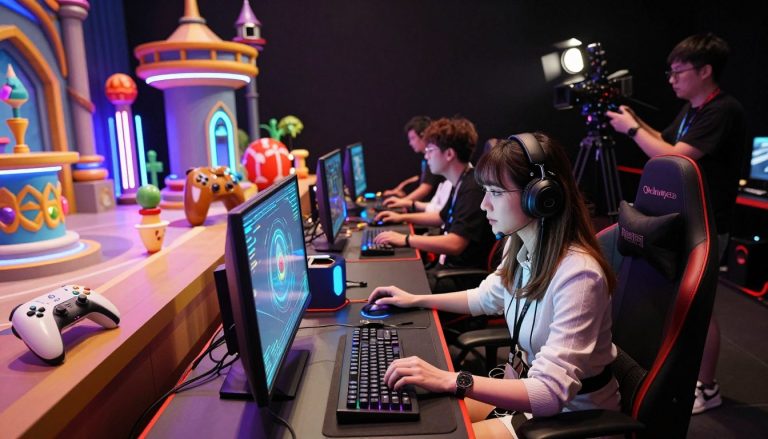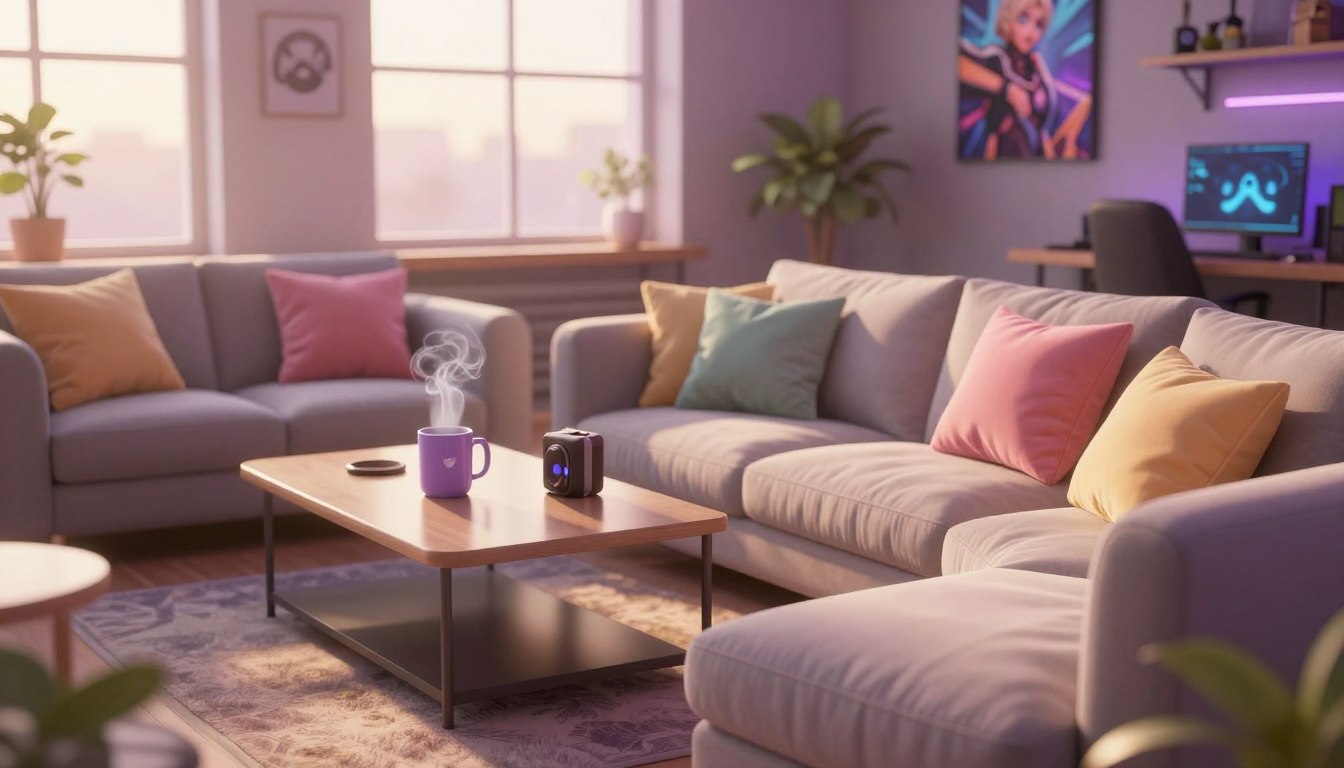
Lounge & After-Stream Relaxation Scenes in UHD
Ever thought about making your workspace a place to unwind after a long day of streaming? It’s key to switch from high-energy work to calm. This helps you succeed in the long run.
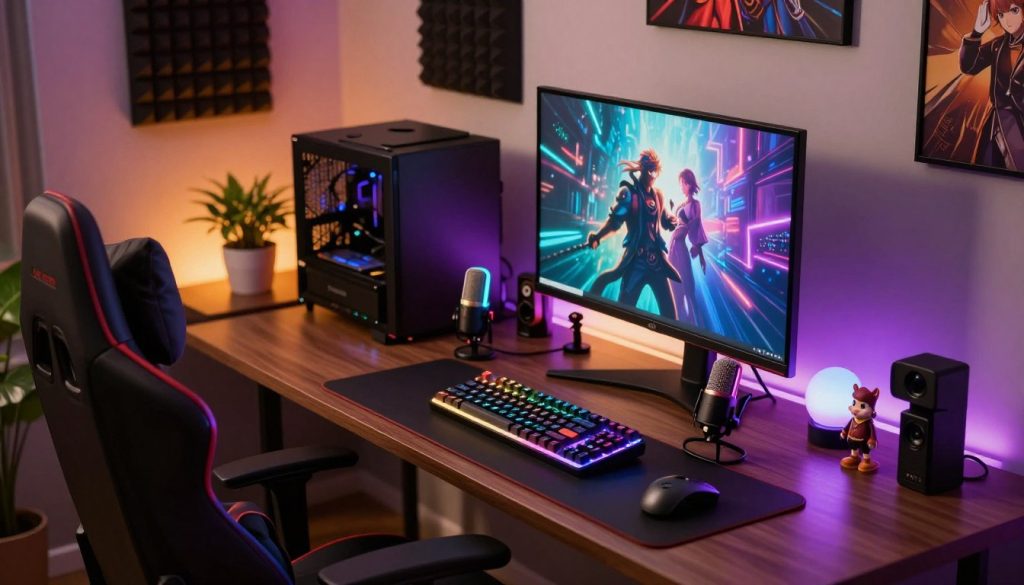
Creating immersive digital environments can turn your desk into a cozy spot. Many streamers are exploring pokimane ai lounge scenes for the perfect mix of function and comfort.
You don’t have to start from scratch to create your dream space. Sites like Nature Relaxation offer over 500 hours of 4K content. This content is a great foundational inspiration for your setup. It provides a stunning backdrop to help you relax and recharge.
Key Takeaways
- Transform your workspace into a calming sanctuary for post-stream recovery.
- Use high-definition visuals to improve your mental well-being after broadcasting.
- Leverage existing 4K content libraries as a blueprint for your custom environment.
- Balance professional aesthetics with personal comfort to boost long-term productivity.
- Create a seamless transition from high-energy streaming to deep relaxation.
Defining the Aesthetic of Pokimane AI Lounge Scenes
You can make your workspace look amazing by learning from popular lounge streams. Having a consistent look is key to a professional and cozy online space. When you focus on pokimane ai lounge scenes, you create a digital haven that invites viewers to unwind.
Understanding the Streamer-Inspired Cozy Vibe
The heart of this look is a calm, static backdrop. It’s like the “nature window” style from Uscenes, with fixed shots for stability. This reduces clutter, letting your audience enjoy the tranquil setting you’ve built.
Using pokimane ai lounge scenes gives you a consistent, welcoming space. This reliability keeps viewers interested in your long-form content. A well-thought-out room layout makes your space feel real and inviting.
Key Visual Elements for High-Definition Relaxation
To get a high-definition look, focus on lighting and texture. Soft, ambient lights create a warm, inviting glow. Make sure your furniture and decor have high-resolution textures for a clear look on big screens.
Color choices are crucial for the mood of your pokimane ai lounge scenes. Soft pastels, warm neutrals, and deep, muted tones are best for a relaxing feel. When these elements come together, you get a top-notch backdrop that improves your stream and viewer experience.
Selecting the Right AI Generation Tools
Starting your digital journey means picking the best AI tool. The tool you pick affects how detailed and real your lounge scene looks. Knowing each tool’s strengths helps you work more efficiently.
Comparing Midjourney and Stable Diffusion for Interior Design
Midjourney is known for its artistic flair and ability to create stunning, realistic images easily. It’s great at capturing complex lighting and textures, perfect for a cozy lounge scene. But, it doesn’t offer much control over architectural details.
Stable Diffusion takes a more technical route. It lets you control furniture placement and room sizes with ControlNet. This precision is key for matching a specific layout or floor plan. Many experts choose this tool for its strict architectural control.
| Feature | Midjourney | Stable Diffusion |
|---|---|---|
| Ease of Use | High | Moderate |
| Architectural Control | Limited | Excellent |
| Visual Aesthetics | Superior | Customizable |
| Hardware Needs | Cloud-based | Local GPU |
Utilizing Leonardo AI for Consistent Stylistic Outputs
Leonardo AI is perfect for keeping your visuals consistent. It lets you train models or use style presets for a unified look. This is key for a cohesive brand identity in your stream.
With its fine-tuning, you can align lighting, colors, and furniture styles. This stylistic harmony keeps your digital space cohesive. The right tool ensures your lounge scene looks professional and engaging for your viewers.
Crafting Effective Prompts for UHD Results
Your skill in creating detailed prompts greatly affects your final image’s quality and feel. For ultra-high-definition results, you need to go beyond simple descriptions. This ensures the AI gets a clear picture of what you want.
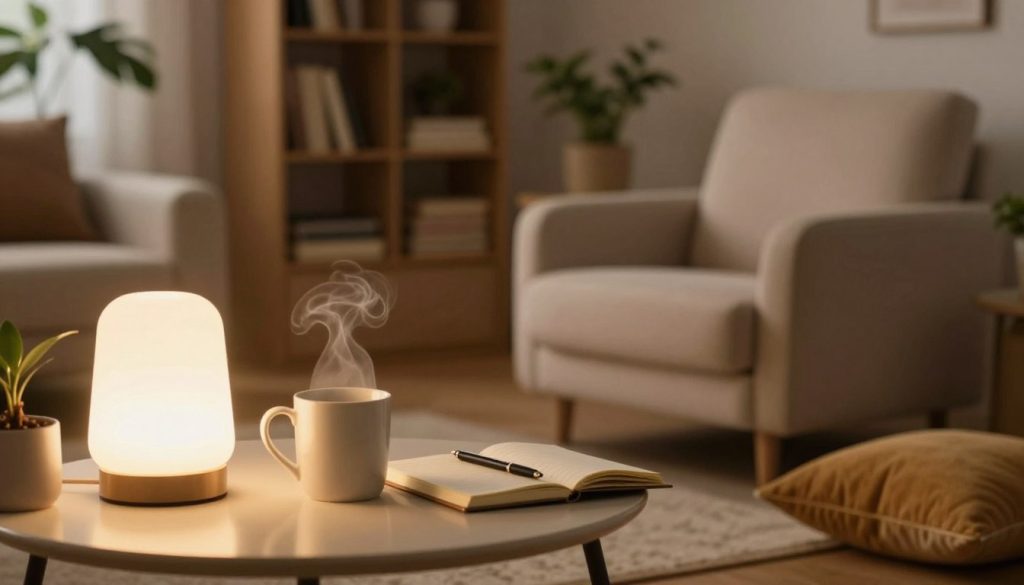
Structuring Your Prompt for Maximum Detail
To get top-notch results, start by defining your main subject and the setting around it. Specificity is key when working with AI models. Clearly state the room type, furniture layout, and the mood you aim for.
Also, specify the camera angle and lens type to match real photography. Using terms like wide-angle lens or depth of field helps the AI grasp your scene’s layout. A well-crafted prompt is crucial for high-quality output.
Incorporating Lighting and Texture Keywords
The feel of your scene heavily depends on the light you describe. By using cozy lighting keywords, you can guide the AI to create warm, inviting tones. Try using phrases like soft golden hour glow, warm ambient lamps, or diffused candlelight to set the mood.
Texture is also key for a realistic look. Describe surfaces with touch-related words like brushed velvet, polished oak, or soft knitted wool. These details help the AI create surfaces that look real and high-quality.
The Role of Ray Tracing and Global Illumination
Ray tracing and global illumination are vital for realistic light effects. These features mimic how light interacts with surfaces, creating natural shadows and highlights. Including these terms in your prompts helps the AI focus on photorealistic light distribution.
This level of detail makes your scenes feel real and immersive. By focusing on these technical aspects, you ensure your scenes are grounded and engaging. The table below shows how different prompt elements improve your image quality.
| Prompt Element | Purpose | Impact on Quality |
|---|---|---|
| Subject Detail | Defines the core focus | High clarity |
| Lighting Keywords | Sets the mood | Enhanced atmosphere |
| Texture Descriptors | Adds realism | Tactile depth |
| Technical Terms | Simulates physics | Professional finish |
Setting Up Your Hardware for 4K Rendering
To keep your AI-generated art sharp in 4k, you need to upgrade your hardware. Rendering detailed scenes needs lots of power. Without the right setup, your system might not handle high-resolution files well.
GPU Requirements for High-Resolution AI Generation
The GPU is the core of your AI workstation. For high-res tasks, look for a card with lots of Video RAM (VRAM). NVIDIA cards are best because they work well with AI tools.
At least 12GB of VRAM is needed for smooth work with big models. For the clearest images and complex scenes, 16GB or more is better. This helps your system handle detailed textures without crashing.
Optimizing VRAM Usage for Complex Scenes
Even with strong hardware, you can still improve memory use. Try making your batch size smaller to avoid memory issues. This keeps your 4k detail high and your system stable.
Using model offloading or lower precision settings, like FP16, can also help. These tweaks let you create detailed scenes that might otherwise be too much for your hardware. Finding the right balance is crucial for top-notch results without always needing new hardware.
| Hardware Component | Entry Level | Professional Grade |
|---|---|---|
| GPU VRAM | 8GB – 10GB | 16GB – 24GB |
| Rendering Focus | Standard HD | 4k detail |
| System RAM | 16GB | 32GB+ |
| Cooling System | Air Cooled | Liquid/High-Airflow |
Step-by-Step Guide to Generating Your Lounge Scene
Creating the perfect lounge scene for your viewers starts with a clear plan. A structured approach ensures every element adds to a calm and professional quality. This makes your space inviting and visually stunning for your audience.
Defining the Room Layout and Furniture Placement
A balanced room layout is key to a successful composition. Identify your main focal point, like a cozy fireplace or a sleek gaming setup. Place your main furniture to guide the viewer’s eye to this center, creating a natural flow.
Don’t clutter the space with too many items. Instead, use negative space to let the room breathe. Properly placed rugs, chairs, and lighting fixtures add depth, making the digital space feel real.
Applying Color Palettes for a Relaxing Atmosphere
Colors are crucial in setting the mood for your viewers. Soft, muted tones like sage green or warm beige are great for a relaxing lounge scene. These colors reduce visual fatigue and promote a peaceful state of mind during long streams.
Choose colors consistently. Use a base color for walls, a secondary color for furniture, and an accent color for decor items. This harmony ensures your final output looks polished and professional.
| Layout Style | Primary Mood | Best Color Palette |
|---|---|---|
| Minimalist | Clean and Focused | Monochromatic Greys |
| Bohemian | Warm and Creative | Earth Tones |
| Modern Luxury | Sophisticated | Deep Navy and Gold |
Refining Lighting and Cozy Atmosphere
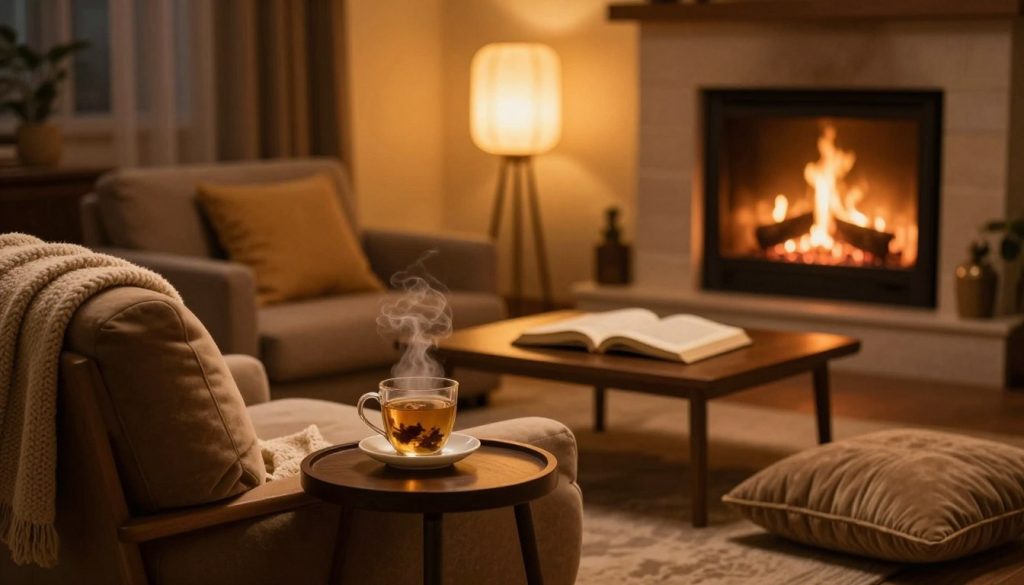
Lighting is key to making any space feel welcoming. It turns static images into cozy places. By playing with shadows and highlights, you add depth and emotion to your digital space. Creating cozy lighting is more than just brightness. It’s about warmth that invites people in.
Simulating Soft Ambient Lighting
For a natural feel, use light sources that feel organic. Soft, diffused light avoids harsh glares and keeps your scene calm. Layering different light points with various intensities and colors helps achieve this.
Here are some tips to improve your scene:
- Choose warm colors like soft ambers or sunset hues for comfort.
- Put light sources behind furniture or plants for soft silhouettes and depth.
- Add glow effects around lamps or screens to mimic real light.
- Avoid harsh, cold-toned lighting to keep the cozy lighting feel.
Adding Post-Processing Effects for UHD Clarity
Post-processing is the last step to perfect your high-definition scene. You want it sharp but still soft and inviting. Small tweaks to contrast and clarity can greatly improve your stream’s quality.
Here’s how to keep your scene professional:
- Use a light sharpening filter to highlight textures like fabric or wood.
- Adjust global contrast to keep dark areas rich and deep, enhancing the cozy lighting feel.
- Apply noise reduction tools carefully to keep the image clean while preserving its natural look.
- Add a slight vignette to focus the viewer’s attention on your lounge, making it feel more intimate.
The goal is to enhance the experience without overwhelming the viewer. Subtle effects keep your background perfect, supporting your content without distraction.
Upscaling AI Images to True UHD Quality
Even the most impressive AI-generated lounge scenes often need a final touch to meet professional standards. Your initial creation might look great on a small screen. But, to achieve true 4k detail, you need a dedicated upscaling process. This ensures your visuals stay crisp and clear on high-end OLED or QLED displays.
Using Topaz Gigapixel AI for Sharpness
Topaz Gigapixel AI is the top choice for boosting resolution without losing texture. It uses advanced machine learning to fill in missing pixels. This is key for keeping 4k detail in complex designs.
When using this software, choose the “High Fidelity” or “Art” models. These settings help keep your lounge’s cozy, hand-crafted look. The result is a sharp, clean image that feels right at home on your high-resolution monitor.
“The goal of upscaling is not just to increase the pixel count, but to reconstruct the visual integrity of the scene so it feels authentic at any size.”
Handling Artifacts and Noise in AI Upscaling
Upscaling can sometimes bring in unwanted noise or artifacts, especially in soft ambient lighting. Use the software’s built-in sliders to smooth out gradients. Finding the right balance between sharpening edges and keeping textures natural is key for 4k detail.
If you still have issues, try a two-pass approach. First, do a light denoise, then upscale. This helps the AI tell apart real textures from digital errors, making your scene ready for your audience.
| Method | Sharpness Level | Artifact Control | Best Use Case |
|---|---|---|---|
| Standard Bicubic | Low | Poor | Quick drafts |
| Topaz Gigapixel | High | Excellent | Final 4K assets |
| AI Upscale Plugins | Medium | Moderate | Batch processing |
Integrating Your Scenes into Stream Overlays
Now that you’ve got your lounge scene looking great, it’s time to add it to your live stream. Seamless integration is key to keeping your stream looking professional. A few technical steps will help your background look as sharp on screen as it does in your design software.
Formatting Images for OBS Studio
To get the best results in OBS Studio, focus on file compatibility and resolution. Export your images as high-quality PNG or JPEG files for color accuracy. Make sure your canvas size matches your stream output, usually 1920×1080 for HD or 3840×2160 for UHD.
When adding your scene, use the “Image” source option for pixel-perfect clarity. Don’t stretch your images to avoid blurriness or distortion. Instead, set your source to “Scale to inner bounds” to keep the aspect ratio right.
| Format | Best Use Case | Compression | Quality Level |
|---|---|---|---|
| PNG | Static Backgrounds | Lossless | Excellent |
| JPG | High-Detail Scenes | Lossy | High |
| WebM | Animated Overlays | Efficient | Very High |
Adding Subtle Motion Effects for Dynamic Relaxation
Static images are a good start, but adding subtle motion makes your stream stand out. Think of a luxury lounge with soft light and shadows. Use the “Image Mask/Blend” filter in OBS to create smooth transitions.
Try layering a transparent video loop of dust motes or light flares over your background. This dynamic relaxation adds realism without distracting viewers. Keep these effects simple to keep your main content in focus.
Curating a Library of Relaxation Scenes
Building a personal library of high-quality visuals is key for any streamer. Having a dedicated collection lets you change your stream’s mood easily. This makes it simple to present a new lounge scene when needed.
Organizing Your Assets by Mood and Theme
Good organization is crucial for smooth live broadcasts. Organize your files into folders by mood, like “Midnight Chill” or “Morning Coffee.” A clear naming convention for each lounge scene saves time when switching scenes.
Use metadata tags for color palette or furniture style. This makes finding the right background easy. Keeping your assets organized keeps your setup stress-free.
Maintaining Consistency Across Your Digital Space
Consistency is key for a strong brand. Choose a specific aesthetic for your lounge scene collection. This makes your channel instantly recognizable.
Stick to a color palette for all your images. This creates a cohesive and professional look. Such attention to detail builds trust and keeps viewers engaged.
| Organization Strategy | Primary Benefit | Best For |
|---|---|---|
| Folder Categorization | Quick Retrieval | Themed Stream Days |
| Metadata Tagging | Advanced Filtering | Large Asset Libraries |
| Color Palette Sync | Brand Recognition | Consistent Visual Identity |
Troubleshooting Common AI Generation Issues
Getting perfect 4k detail in your lounge scenes needs a careful eye for common errors. AI tools are great, but they can sometimes create artifacts that ruin the look. Consistency is key to keeping your digital space top-notch for your viewers.
Fixing Distorted Furniture and Architectural Errors
Don’t throw away an image just because of warped chair legs or odd room shapes. Use inpainting tools to fix only the bad parts. This way, you keep the rest of the scene looking sharp.
If the building looks off, tweak your negative prompts to avoid words like “distorted” or “warped.” Changing the seed value or increasing sampling steps can fix these issues. Patience during the generation phase saves a lot of time later.
“The difference between a good stream and a great one lies in the clarity and intentionality of the visual environment.”
Adjusting Aspect Ratios for Different Display Monitors
People watch your stream on many devices, from standard monitors to ultra-wide screens. To keep your 4k detail sharp, make sure your assets have the right aspect ratio. A 16:9 ratio is standard for most platforms.
For ultra-wide monitors, create a wider canvas or use AI to extend your scene’s edges. Always check that your main points stay centered to avoid bad cropping on smaller screens. Here’s how to tackle common display issues.
| Issue Type | Primary Cause | Recommended Fix |
|---|---|---|
| Warped Furniture | Low sampling steps | Increase steps to 50+ |
| Architectural Glitch | Complex prompt | Use inpainting tools |
| Aspect Ratio Mismatch | Incorrect settings | Crop or outpaint |
| Blurry Textures | Upscaling error | Use AI-based sharpening |
By solving these technical problems, your lounge scenes will look great on all platforms. Regular troubleshooting lets you focus on what’s most important: making your community happy.
Conclusion
Creating a professional lounge space takes time and attention to detail. You now know how to turn simple ideas into engaging visuals for your viewers.
Your streaming setup shows off your personality and creativity. By following these design tips, you make sure your viewers feel at home every time you stream.
Don’t be afraid to try out different textures and lighting setups. You might discover something new that your community loves. Nature Relaxation offers a free 7-day trial for new customers. It’s a great way to explore and find your style.
Keep exploring and improving your digital space. Your commitment to quality will make your channel stand out. Begin building your ideal lounge scene today and see your viewership grow.
FAQ
How can I replicate the aesthetic of a Pokimane-inspired lounge scene for my own space?
To get that cozy lounge vibe, focus on a consistent look. Use fixed-angle visuals, like the “nature window” style from Uscenes. Add cozy lighting and high-definition static backdrops to make your space feel like a sanctuary.
Which AI platforms are best for generating high-quality interior relaxation environments?
Midjourney and Stable Diffusion lead in architectural rendering and design. For consistent style, Leonardo AI offers great control. It ensures your scenes meet high standards, like those from Amazon Cloudfront.
What keywords should I include in my prompts to achieve 4k detail and realism?
For top-notch results, include terms like ray tracing and global illumination in your prompts. Mention 4k detail and focus on textures and lighting. This helps the AI create realistic scenes, like those from SoniCentric.
What are the hardware requirements for rendering these high-resolution AI scenes?
Rendering high-resolution scenes demands strong hardware. You’ll need a powerful GPU with lots of VRAM. Make sure your settings are optimized, like Uscenes does with their files.
How do I ensure my generated lounge scene is perfect for looping indefinitely?
For a seamless loop, balance your room layout and choose calming colors. Study nature films from Nature Relaxation for inspiration. Use soft light and furniture placement to avoid distractions.
How can I upscale my AI-generated images to true UHD quality for OLED or QLED screens?
Even the best AI needs post-processing. Use Topaz Gigapixel AI to boost sharpness to 4k. This process reduces noise and artifacts, making your image look great on high-end screens.
What is the best way to integrate these relaxation scenes into OBS Studio?
Format your UHD image right for OBS Studio. Add motion effects, like drifting particles or candle flames, to make it feel premium. This makes your scene feel alive.
How do I fix common AI errors like distorted furniture or architectural glitches?
Correct architectural errors in post-processing or refine your prompt. Use “in-painting” in Stable Diffusion for warped objects. Adjust your aspect ratio to fit your monitor for visual integrity.
Is there a way to access pre-made 4K content if I don’t want to generate my own?
Yes, use Nature Relaxation’s vast library of 4k content. It offers over 500 hours of high-quality visuals. This is great for inspiration or a ready background.