Micro-Expression Mapping: Capturing Signature Smirks & Glances
Ever wondered why digital characters seem empty, yet real people grab your attention with a look? It’s all about how our brains work. Babies start to see faces just days after birth, making us experts at reading tiny social hints.
To make virtual characters feel real, you need to connect static models with the dynamic world of humans. By learning pokimane ai expressions, you can mimic the tiny muscle actions that make interactions feel real. This turns a simple avatar into a relatable digital friend that connects with your audience.
Grasping these technical details lets you put complex emotions into your virtual characters. By capturing the unique smirks and quick glances of real life, you achieve a new level of digital realism. Let’s dive into how to bring your creations to life with precise movement mapping.
Key Takeaways
- Human brains are biologically hardwired to recognize and interpret facial cues from birth.
- Digital avatars often fail to connect because they lack the subtle, dynamic movements of real people.
- Mastering micro-expressions is essential for creating believable and engaging virtual personas.
- Technical mapping of facial muscle movement bridges the gap between static models and lifelike characters.
- Precision in capturing small gestures like smirks significantly enhances user immersion.
Understanding the Mechanics of Micro Expressions
Facial movements are not as simple as they seem. They can show different emotions based on the situation. To create realistic digital performances, you need to understand the nuanced side of human behavior.
“The face is a map of the mind, where even the smallest twitch can reveal a hidden truth about the subject’s intent.”
Looking at micro expressions is like learning a secret language. These quick, involuntary movements are hard to catch. They tell us a lot about how an audience will see your character.
- Contextual Framing: The setting changes what a smile means.
- Temporal Duration: How long a movement lasts affects its emotional impact.
- Muscle Synergy: How eyes and lips move together makes a performance believable.
Defining the Anatomy of a Glance
A glance is more than eye movement; it’s a micro expression that guides the viewer’s focus. By studying a gaze’s path, you can show curiosity, doubt, or insight. This detail makes a digital character feel alive.
To get these movements right, focus on these key areas:
| Movement Type | Emotional Cue | Tracking Priority |
|---|---|---|
| Rapid Saccade | Surprise | High |
| Lingering Gaze | Affection | Medium |
| Avoidant Shift | Discomfort | High |
The Role of Neural Detail in Digital Avatars
Creating realistic digital characters needs a focus on neural detail. By adding neural detail to your animation, you capture the subtleties of human movements. This ensures your avatar moves naturally.
By focusing on these details, you make your digital performances more engaging. The goal is to move from stiff, robotic actions to the natural complexity of real life. Understanding these mechanics lets you create unforgettable digital experiences.
Preparing Your Hardware and Software Environment
To get top-notch results, you need to set up your space right before starting. For professional avatars, your setup must catch tiny muscle movements perfectly.
Software for facial analysis is key. But it only works well if your camera gives it good data.
Selecting High-Fidelity Facial Tracking Cameras
Choose a camera that shoots at least 60 frames per second. This way, quick facial changes are caught clearly.
Go for cameras with depth sensors or high-resolution optical tracking. High-fidelity gear cuts down on noise, helping your software track movements better.
“The quality of your digital output is directly proportional to the clarity of your input data.”
Optimizing Lighting for Subtle Movement Detection
Lighting is as crucial as your camera. You want consistent, diffused light to avoid harsh shadows on your face.
Stay away from backlighting, which can hide important details. Use a soft key light above your eyes to light up your face.
Keep your environment stable. This helps your software focus on your expressions, not background noise. This setup is essential for realistic digital performances.
Mastering Pokimane AI Expressions for Your Workflow
Learning pokimane ai expressions is more than just using software. It’s about understanding the unique ways people express themselves. Many creators think certain facial looks always mean the same emotion. But this can make their digital characters seem stiff and unrelatable.
To make a stream that feels real, focus on the subtle nuances of movement. This way, your digital persona can seem alive and interactive.
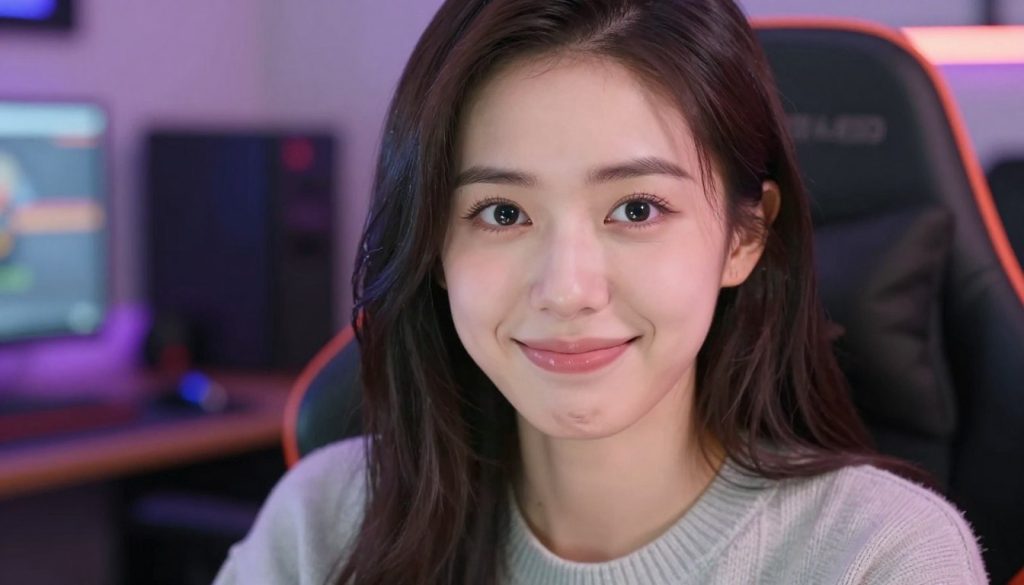
Analyzing the Signature Smirk Patterns
The signature smirk is key to digital expression. Instead of seeing it as a fixed thing, break down the muscle movements that make it special. Authenticity comes from knowing how the lip corners move with the eyes.
Notice how these movements change with the conversation’s tone. By studying these small details, you can control your character’s personality better. This ensures your pokimane ai expressions stay true to your character yet adapt during live streams.
Integrating AI Models for Real-Time Expression Synthesis
Using advanced AI models lets you create these complex expressions live. The aim is to connect your physical actions with the digital output, keeping it human. Real-time synthesis needs precise tracking that gets your intent, not just your shape.
Choose systems that let your character smoothly move between different states. This is key for a stream that feels natural to your audience. Mastering these pokimane ai expressions will make your content stand out in a busy online world.
Setting Up Your Facial Tracking Software
Your digital avatar’s personality depends on your tracking software setup. High-fidelity animation needs a precise environment setup. This ensures your performance is accurately shown on screen. Proper configuration is key for a professional digital presence.
Calibrating Neutral Facial Baselines
Facial movements tell more than just emotions. You need a neutral baseline for your software. If it’s wrong, your avatar might look like it’s always smiling or squinting.
To start right, follow these steps:
- Sit in your usual streaming spot with a relaxed face.
- Make sure your face is well-lit to avoid shadows.
- Use the software’s “reset” or “calibrate” command with a neutral face.
- Check that your digital model is still before moving on.
Adjusting Sensitivity for Micro-Movement Capture
After setting your baseline, adjust the sensitivity for micro expressions. These small changes make your animation unique. Without high sensitivity, your avatar will seem stiff and less human.
“The difference between a good performance and a great one lies in the smallest details of the face, where intent is often hidden in plain sight.”
To get the best results, try these tweaks:
- Boost the gain on eye-tracking to catch quick glances.
- Lower the threshold for lip-corner elevation to catch micro expressions fast.
- Do a slow, deliberate smirk to see if the software tracks it well.
By fine-tuning these settings, your digital persona stays true and engaging. Regular calibration lets you focus on your content. The software takes care of the expression details.
Mapping Subtle Glances to Digital Models
Subtle glances are like a silent language for your character. They connect the digital world to real emotions. By capturing the exact direction of a gaze, you add depth that viewers can feel.
Studies show that avoiding eye contact can mean guilt or hesitation. So, mastering these movements lets you show complex feelings through your avatar with remarkable accuracy.
Defining Keyframe Anchors for Eye Movement
To look natural, you need to set keyframe anchors for eye movement. Don’t make the movements too straight. Human eyes move in quick, darting motions.
Setting these anchors helps your character stay focused. It keeps the look from feeling too robotic, which can break the illusion.
Think of these anchors as where your character’s attention rests. When done right, the eyes seem to follow objects or people with intentionality. This is key for detailed digital performances.
Smoothing Transitions Between Subtle Expressions
After setting anchors, smooth out the transitions. Sudden eye movements can make an avatar look startled or glitchy. Use easing functions to make the movements feel natural and smooth.
Smooth transitions make the eyes blend well with the rest of the face. When the eyes and face move together, the whole performance feels more cohesive and believable. Here’s how different gaze patterns affect how people see your character.
| Gaze Pattern | Social Implication | Technical Implementation |
|---|---|---|
| Direct Contact | Confidence and Honesty | Fixed anchor with high neural detail |
| Downward Aversion | Shyness or Guilt | Slow transition to lower anchor |
| Rapid Darting | Anxiety or Alertness | Multiple short-duration keyframes |
| Slow Tracking | Contemplation | Linear interpolation with easing |
Enhancing Facial Fidelity Through Neural Networks
Using neural networks can greatly improve your digital presence. They help your avatar move more naturally. Since human expressions are complex, universal presets often don’t capture your unique style. Custom neural networks ensure your digital self looks real every time you stream.
Training Custom Models on Specific Facial Cues
Standard tracking software can miss the small details that make you, you. Training custom models on your facial cues is the solution. This way, the AI can pick up on your unique quirks with professional accuracy.
Using your own movements to train the model makes it more responsive. This tailored approach is key to achieving facial fidelity that feels real to your viewers. You’re teaching the software to reflect your personality, not just your face.
Reducing Latency in Expression Rendering
Even the most precise model is useless if it’s slow. Cutting down on latency is essential for a seamless digital experience. You can do this by making the neural calculations faster.
Improving hardware acceleration and data processing speeds up results. When your digital model moves in perfect sync with you, your stream’s facial fidelity improves. This ensures your viewers stay engaged without noticing any delays.
Refining the Signature Smirk Technique
The secret to a captivating digital avatar is in the smirk technique. By focusing on precise muscle mapping, you can make a static model come to life. This process needs a lot of neural detail to show real intent in every movement.
Adjusting Lip Corner Elevation Parameters
To get a convincing smirk, mastering the sliders for lip corner elevation is key. Start by finding the zygomaticus major muscle in your software. Small, incremental adjustments are crucial here. Even a tiny change can greatly affect your avatar’s emotion.
Don’t try to max out these parameters right away. Instead, try small changes to find the perfect balance. This ensures your digital character stays true to itself in all animations.
Layering Expressions for Naturalistic Results
A smirk is rarely alone on a face. To make it believable, layer your primary smirk with other facial cues. For example, lowering the brow is key to showing intent, like playfulness or guilt.
By mixing these movements, you add depth to your character’s performance. This requires careful attention to how muscles work together in one expression. When done right, your digital work will seem more real and emotionally rich.
Troubleshooting Common Tracking Artifacts
Even the most advanced digital avatars can have visual glitches. These glitches can ruin the illusion of reality. To keep your presence polished, you must fix these technical issues.
By solving these problems, your micro expressions will stay clear and easy to read. This is crucial for every stream.
Correcting Jitter in High-Sensitivity Modes
Facial Action Units (AUs) range from 0 to 1. A 0 means the unit is not present, and 1 is the maximum. High-sensitivity modes can make these values jump around a lot.
This jumping is known as unwanted jitter in your avatar’s face. To solve this, use a smoothing filter or tweak your dead-zone settings. Lowering the sensitivity stops the system from misreading tiny micro expressions as real.
This change helps your digital self look smooth and natural, not shaky.
Resolving Mismatches Between Audio and Expression
Creators often face a problem where their words and facial movements don’t match. This mismatch can shock your viewers. It’s vital to have low-latency processing to sync your micro expressions with your voice.
First, check your buffer settings in your tracking software. Make sure they’re not too high. If the problem continues, try moving some processing to a dedicated GPU. This can speed up your visual output.
Keeping audio and visuals in sync is key to a seamless digital experience.
Advanced Techniques for Expression Layering
To make a digital persona feel real, you need to mix micro-expressions and macro-gestures. This blending makes your character more authentic and responsive. It’s key for making your pokimane ai expressions seem natural during live streams.
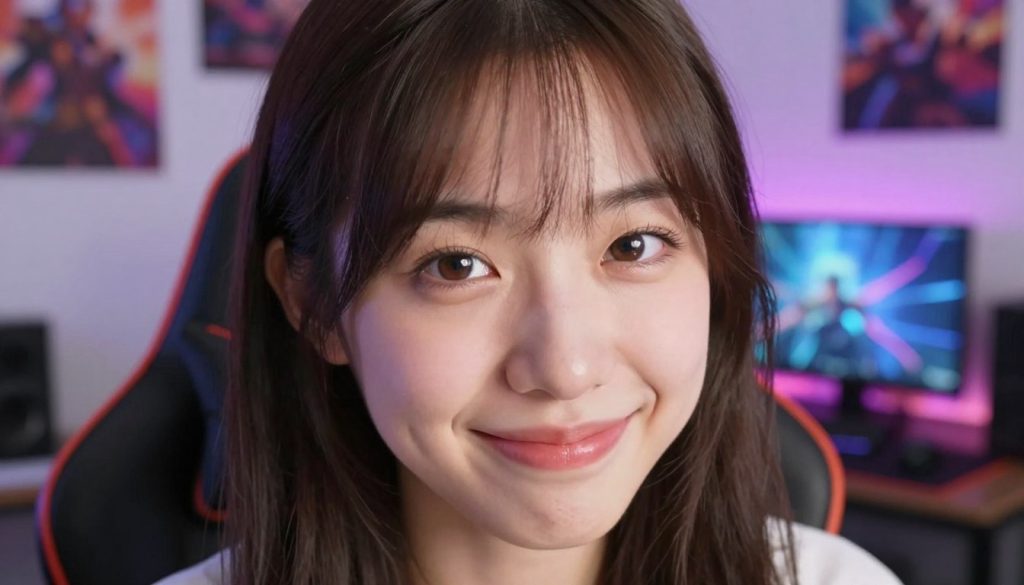
Combining Micro-Expressions with Macro-Gestures
Facial tracking alone can’t show complex emotions. Mixing gestures, posture, and gaze makes your thoughts clearer. When your avatar mirrors your body language, your facial expressions have more emotional impact.
Your digital performance is like a symphony. Micro-expressions add the fine detail, while macro-gestures set the scene. This mix makes your pokimane ai expressions shine in the digital world.
Automating Expression Triggers for Streamlined Performance
Handling every movement by hand can be too much during a stream. Setting up expression triggers automates some actions. This lets you keep your performance smooth without losing the subtlety of your input.
The aim is to make your system feel like an extension of you. By automating routine tasks, you can focus more on engaging with your viewers. This balance keeps your avatar consistent while you stay in the moment.
| Feature | Manual Control | Automated Triggers | Hybrid Approach |
|---|---|---|---|
| Precision | High | Low | Very High |
| Consistency | Variable | High | High |
| Ease of Use | Difficult | Easy | Moderate |
| Emotional Depth | Maximum | Baseline | Optimized |
Best Practices for Maintaining Consistent Character Identity
AI tools are powerful, but your personal touch is key to keeping your character consistent. Relying only on pre-set facial expressions can’t match the depth of your real personality. To keep your facial fidelity high, treat your avatar as an extension of yourself, not just a digital figure.
Balancing AI Automation with Manual Control
Automation is great for routine tasks, but it can lose the human spark that keeps people watching. Use AI for basic movements, but take control for emotional moments. This mix ensures your avatar’s reactions feel as real as your own.
- Use automation for background idle animations to save processing power.
- Apply manual triggers for signature smirks or specific reactions during high-stakes moments.
- Regularly audit your AI settings to ensure they align with your current performance style.
Documenting Your Unique Expression Library
Consistency is hard without a way to repeat your best expressions. A library of your signature looks helps keep facial fidelity consistent, no matter the tech changes. By documenting your most effective glances and smirks, you create a solid base for your digital identity.
Keep a simple log of your settings to keep your character recognizable over time. Documenting these details protects your brand and ensures a deep connection with your audience. Your dedication to these details makes your avatar truly iconic.
Conclusion
Learning to map micro-expressions is a journey. It’s about getting better at your setup and understanding facial expressions. This work helps us understand how faces move in everyday life.
Your efforts make digital characters more real and emotional. By using these advanced techniques, you bring depth to digital beings.
Keep adding to your personal expression library. This keeps your digital self as lively as your real one. Share your discoveries with others to advance facial tracking technology.
Be open to new software and hardware. Your focus on detail makes your virtual interactions better. It keeps your work fresh and ahead of the latest trends.
FAQ
What are Pokimane AI expressions and how do they enhance digital realism?
Pokimane AI expressions are the detailed facial movements that mimic the style of professional creators. They help turn static 3D models into lifelike digital personas. This is done by capturing small facial movements and neural details.
By focusing on these details, your avatar can show emotions in a way that feels real. This goes beyond just showing basic emotions.
Why is neural detail important for achieving facial fidelity in my avatar?
Neural detail is key for a realistic face. It involves mapping small muscle movements and skin changes during speech and expressions. This makes your digital character’s movements feel natural, not robotic.
Systems like NVIDIA Maxine or Apple’s ARKit focus on this detail. They aim to make your digital character interact like a real person.
Which hardware provides the best results for tracking micro expressions?
For precise tracking of micro expressions, you need top-notch hardware. The iPhone 15 Pro is a good choice for those on a budget. For professionals, OptiTrack or Vicon systems are best.
Good lighting is also crucial. Soft, consistent light helps track small facial movements accurately.
How can I prevent my avatar from looking robotic when mapping subtle glances?
Robotic movements happen when eye movements are too straight or lack purpose. To avoid this, set keyframe anchors for natural eye movement. This includes quick eye shifts and saccades.
Smooth transitions in eye movements are important. They show emotions like guilt or thoughtfulness. Tools like Live2D or Unreal Engine’s MetaHuman framework help blend these movements.
What is the best way to calibrate a neutral facial baseline for accurate tracking?
Calibration is the first step. Record your face when it’s completely relaxed. This sets a “zero point” for tracking.
Adjusting sensitivity settings during this step is crucial. It helps the software catch micro expressions without errors.
Can I use AI to reduce latency in my real-time expression rendering?
Yes, AI can help reduce latency. Training a neural network on your face and movements makes it more efficient. This ensures your avatar’s expressions match your live performance.
This is key for keeping your audience engaged during live streams on Twitch.
How do I troubleshoot jitter in high-sensitivity tracking modes?
Jitter happens when the software can’t tell apart your movements from noise. If your Facial Action Units (AUs) data is all over the place, try increasing smoothing in your software.
Also, make sure your face is well-lit. This helps the software track your expressions accurately.
Why should I combine micro expressions with full-body gestures?
Human communication uses many signals, not just facial expressions. Adding full-body gestures to your avatar’s movements makes it more believable. This is especially true for Pokimane AI expressions.
When your avatar’s face and body move together, it feels more real. This makes your digital persona more engaging.
How do I maintain a consistent character identity across different software platforms?
To keep your character consistent, document your expression library well. Save your neural detail settings and sensitivity curves. This way, your avatar always looks like you, no matter where you are.
Manual checks help prevent your AI from using the wrong expressions. This keeps your brand identity consistent.