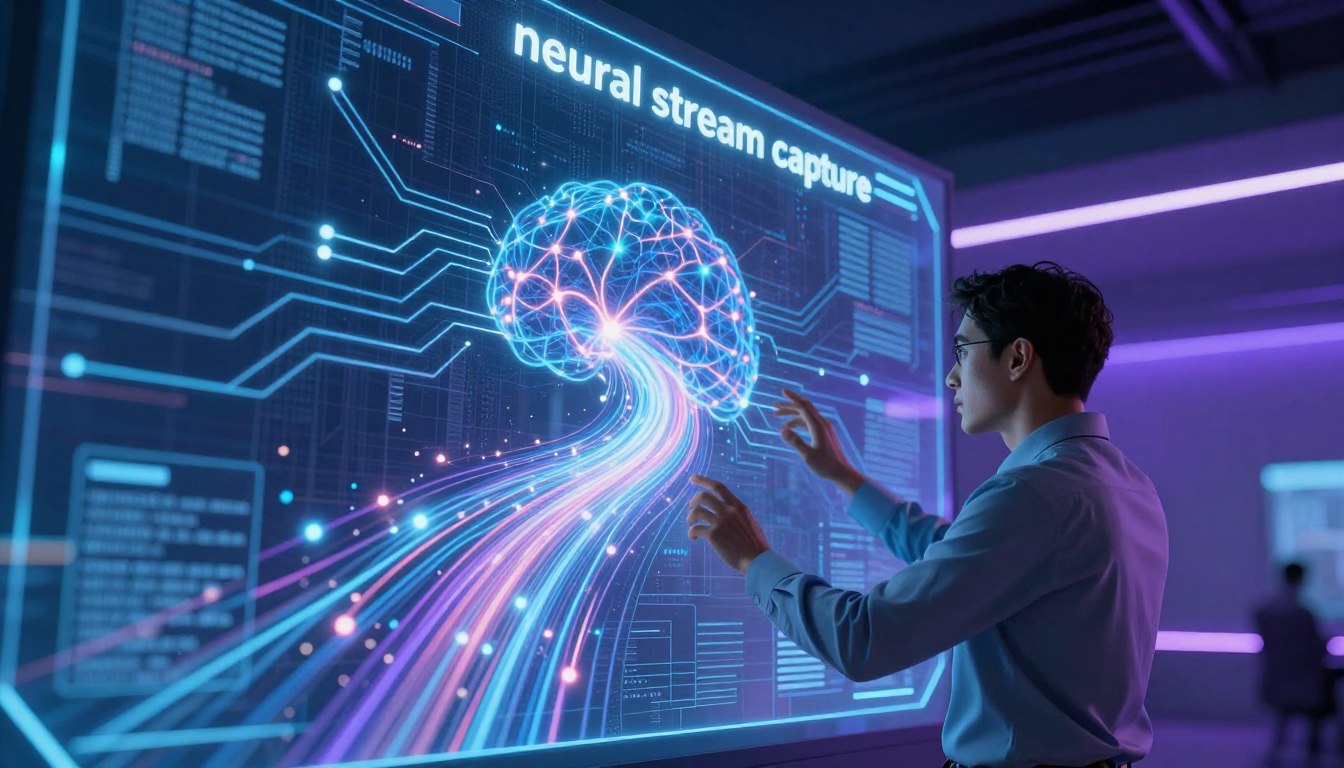
Neural Stream Capture Explained: Recreating Live-Cam Energy in Seconds
Ever thought about making your digital content as engaging as a live show? Many creators find it hard to mix smooth animation with the real-time feel of a live feed.
Neural stream capture is a game-changer. It uses advanced tech to add the excitement of live shows to your projects.
Unlike Instagram, which needs you to log in, this tech lets you skip those steps. You can create that live feel without needing people there.
Learning about this tech is key to making your digital stories pop. It lets you make your work more engaging and keep your viewers hooked.
Key Takeaways
- Neural stream capture bridges the gap between static media and live-cam energy.
- This technology allows creators to simulate spontaneous, real-time visual experiences.
- You can enhance your creative projects by leveraging these advanced processing tools.
- Platform authentication, such as Instagram logins, remains a standard for social interaction.
- Mastering these techniques helps you maintain high engagement levels across your digital content.
Understanding the Core Technology
To use virtual presence, you need to know about neural stream capture. It connects your body movements to digital screens, turning video into useful data.
This tech is different from usual login systems. It sends data smoothly, without needing constant checks.
Defining Neural Stream Capture
Neural stream capture uses advanced tech to map your face and body on a digital model. Deep learning algorithms make sure every move is accurately shown online.
How Neural Networks Mimic Live-Cam Energy
Neural networks catch the small details that make interactions feel real. They look at your video to see tiny facial changes and how you move. This lets the software mimic the energy of live chats.
This tech does more than just track movements. It learns how you act, making your digital self react like you do. This makes your online presence feel natural and real.
The Role of Real-Time Data Processing
Fast data processing is key for clear output. It makes sure there’s no delay between your action and the digital response. If it slows down, your connection breaks.
You need strong hardware to handle this tech. When you set up your system right, your digital self stays lively and interactive. This is what makes a top-notch stream.
Preparing Your Hardware and Software Environment
Starting your journey to professional neural capture needs the right setup. A stable environment ensures your data moves smoothly from the physical to the digital world. Without it, you might hit roadblocks that mess up your real-time streams.
Selecting Compatible Camera Systems
Choosing the right camera is key for capturing motion data accurately. Look for sensors with high frame rates and low global shutter latency. These features help avoid motion blur, crucial for precise neural mapping.
Choose cameras that offer uncompressed video output via HDMI or SDI. This raw data helps your neural network process facial landmarks more precisely. Reliability in your hardware choice affects your output’s quality.
“The quality of your neural stream is only as good as the data provided by your input device. Invest in hardware that prioritizes raw signal integrity over aesthetic features.”
Optimizing GPU Performance for Neural Processing
Your graphics processing unit is the heart of your neural capture pipeline. It needs enough VRAM and high-speed memory bandwidth for complex calculations. Keeping your drivers updated is also key for compatibility with new neural models.
Watch your GPU’s temperature during long sessions. Overheating can cause frame drops, ruining your live-cam experience. Use cooling solutions to keep your hardware running smoothly.
Essential Software Suites for Stream Integration
Integrating your hardware needs a strong software stack for real-time data processing. Most pros use software that handles asynchronous data streams well. Make sure your platform supports easy authentication and secure data handling.
The following table outlines the recommended hardware and software requirements for a professional-grade setup:
| Component | Minimum Requirement | Recommended Spec |
|---|---|---|
| GPU | 8GB VRAM | 16GB+ VRAM (RTX 40-series) |
| Camera | 1080p at 60fps | 4K at 60fps (Global Shutter) |
| Software | Standard API Support | Enterprise Neural Suite |
| Connection | USB 3.0 | Thunderbolt 4 / Fiber Optic |
Always check if your software works with your operating system’s security. Some platforms need specific user steps for advanced features. Keeping your software up to date helps avoid connectivity problems in your projects.
Configuring Neural Stream Capture Settings
Getting your setup right is key to top-notch digital work. By fine-tuning your software, you make the most of your neural stream capture gear. Adjusting these settings keeps your output smooth and professional.
Calibrating Input Sensitivity
Calibration is crucial for precise tracking of your movements. Start by testing your range in the software to set a baseline. Fine-tuning these settings helps avoid jitter and catches even small gestures.
Too high sensitivity can cause your avatar to move erratically. Too low, and it might feel slow. Consistent calibration is essential for a natural look in your live sessions.
Adjusting Latency for Real-Time Responsiveness
Latency can ruin a smooth neural stream capture experience. You need to cut down the delay between your actions and the digital response. Begin by tweaking your buffer settings to find the right balance for your gear.
Top systems often support smaller buffer sizes, which boosts data flow. Prioritizing low latency means your audience sees your expressions in real-time. This is crucial for keeping them engaged in your work.
Setting Up Neural Mapping Profiles
Custom profiles let you save settings for different characters or scenes. With neural mapping profiles, switching between setups is quick and easy. This is great if you work with various avatars that need different movements.
Organize your profiles by project to make your workflow smoother. Efficiency in setup means more time for creativity. Always check your saved profiles before a big capture session to ensure they work right.
Mastering Motion Logic for Realistic Movement
Motion logic connects your live performance to the digital avatar on screen. It makes sure your character shows your intent accurately. Learning motion logic is key to creating believable digital experiences.
Understanding the Principles of Motion Logic
This technology uses biomechanical constraints to keep movements real. It checks if limbs overlap during animations. Understanding these constraints helps predict how your digital model will move.
Good motion logic also looks at the center of gravity and weight. When you move, the system shows how that affects your virtual body. This gives a sense of physical presence often missing in simple animations.
Mapping Physical Gestures to Digital Avatars
Mapping turns your camera data into your 3D model’s bone structure. Make sure your physical space matches the virtual one to avoid distortion. Proper calibration keeps your character looking right.
After aligning the skeleton, you can link gestures to actions. This makes your body language control the character’s actions. By improving these links, your character’s movements feel natural.
Smoothing Jitter and Artifacts in Motion Data
Raw data can have noise from lighting or sensors, causing jitter. Use low-pass filters to smooth out the movement. These filters keep your performance fluid while removing noise.
If artifacts still show up, try interpolation to fill in tracking gaps. This keeps your character moving smoothly, even when sensors lose sight of a limb. The table below shows common problems and how to fix them.
| Issue Type | Primary Cause | Recommended Fix |
|---|---|---|
| High-Frequency Jitter | Sensor Noise | Apply Low-Pass Filter |
| Data Gaps | Occlusion | Linear Interpolation |
| Rig Stretching | Scale Mismatch | Re-calibrate Skeleton |
| Delayed Response | Processing Lag | Optimize GPU Buffer |
Achieving Lifelike Expressions Through Neural Mapping
To get lifelike expressions, you need to understand neural mapping well. The quality of animation depends on how you handle small face changes. Paying attention to these details makes your animation feel real.
Capturing Micro-Expressions and Eye Tracking
For accurate data, focus on micro-expressions and eye movements. These tiny changes show a character’s emotions. High-resolution sensors help capture these moments for lifelike expressions.
Eye tracking is also crucial for connecting with the viewer. When a character’s eyes move naturally, it adds to the performance. Make sure your equipment tracks pupil dilation and eyelid movements for a more realistic feel.
Synchronizing Facial Muscles with Neural Inputs
After collecting data, you need to match facial muscles with neural inputs. This step involves linking specific data to your digital model’s rig. Consistency is key to keep the illusion alive.
Use real-time feedback to check if the muscle movements match the emotion. If not, tweak your settings to focus on the most expressive parts of the face. This keeps your lifelike expressions smooth and natural.
Balancing Stylization and Realism
Choosing between stylization and realism is an artistic decision. You might want to make some features more exaggerated to highlight a character’s personality. Strategic exaggeration can make a character more relatable.
Test your settings to see how realistic your character can look without feeling too fake. By fine-tuning your neural mapping, you can create lifelike expressions that are both authentic and fit your project’s style.
Executing the Capture Process
Mastering the execution phase is key to a smooth workflow. Once your setup is ready, you can start the neural stream capture for your project. This step needs precision to ensure your digital assets meet the quality you want.
Initializing the Neural Stream
First, start your main software and check your hardware connections. You must start the handshake protocol between your camera and the processing engine. This step ensures your neural stream capture software works well with your devices.
Monitoring Data Flow in Real-Time
After starting the stream, watch your dashboard for data packets. Look for steady frame rates and little jitter for high quality. If processing time goes up, adjust your buffer settings right away to keep things smooth.
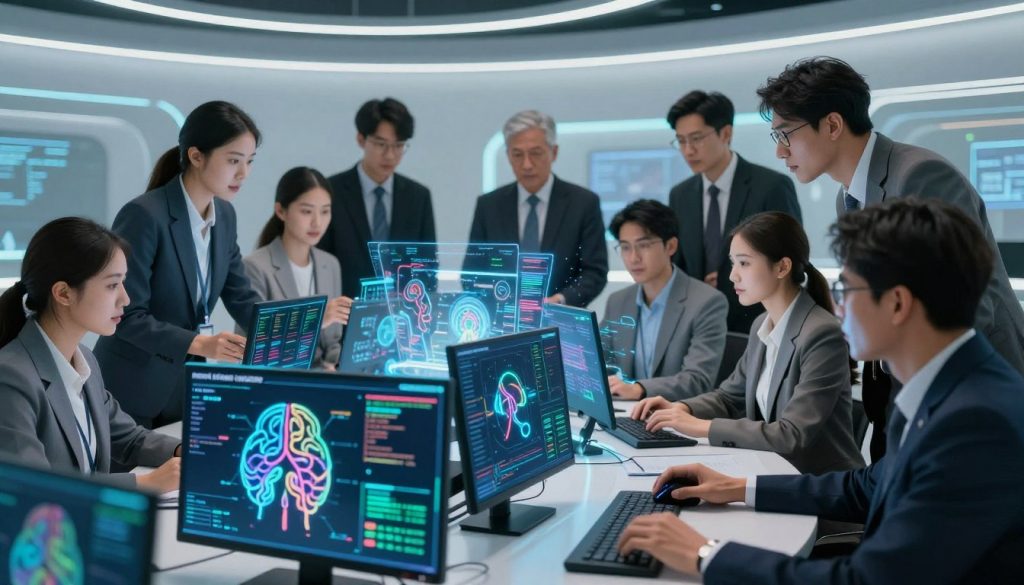
Watching in real-time helps spot problems before they ruin your output. Visual feedback loops help make sure the system gets your movements right. Always check that the data stream stays within expected limits during your session.
Managing Capture Sessions for Consistency
Consistency is crucial for a professional production, especially with many takes. Use a strict naming system for your files to stay organized. A structured session log helps track the best takes for your animation.
If you need to redo a movement, keep your lighting and camera the same as before. This attention to detail in your neural stream capture saves time later. Consistency in your input data means better results in your final project.
Refining and Polishing Your Captured Data
Turning raw neural captures into polished assets is key in your creative process. Modern systems are advanced, but raw data often needs a lot of work before it’s ready. By paying attention to these details, you keep your motion logic smooth and consistent.
Post-Capture Cleanup Techniques
The first step is to remove unwanted noise from the captured data. Focus on smoothing out jittery movements, especially in high-intensity parts. Precision is key when adjusting keyframes to match the character’s intended performance.
“The beauty of digital performance lies in the ability to refine the human element until it achieves perfection.”
Use automated scripts for repetitive cleanup tasks. This lets you focus on the artistic details of the movement. Keeping strict motion logic during this phase helps your character feel real and connected.
Applying Neural Filters for Enhanced Fidelity
Neural filters can greatly improve your captured data without manual effort. They analyze your movement to predict and fill in missing details. This makes your performance look more realistic than ever before.
- Enhance skin texture and muscle deformation.
- Stabilize shaky camera inputs automatically.
- Upscale low-resolution tracking data for better fidelity.
Correcting Tracking Errors and Data Gaps
Even top systems can have tracking errors or data gaps. Use interpolation to fill in missing frames smoothly. Consistent data flow is crucial for your character’s performance.
If a limb or facial feature loses tracking, manually re-align the landmarks. This keeps your motion logic consistent, even with hardware glitches. Always check your work by playing back the timeline at different speeds to catch any issues.
Integrating Neural Streams into Creative Projects
Turning raw data into a finished scene is all about connecting capture tools to creative suites. Using neural stream capture well in your workflow keeps the energy of your performance alive. This is key for a smooth animation process.
Exporting Data to Animation Software
First, you need to export your data into formats like FBX or Alembic. These formats are widely supported by top animation software, such as Maya or Blender. This ensures your motion data stays accurate.
Make sure your neural stream capture settings match the software’s frame rate and coordinate system. This avoids common problems like scaling errors or rotational offsets. These issues can mess up your character’s movement.
Syncing Neural Streams with Audio Tracks
Keeping your performance and audio perfectly in sync is crucial for realism. Use timecode-based alignment to match facial movements with spoken dialogue exactly.
When syncing your neural stream capture with audio, consider using automated lip-sync tools. This meticulous attention to detail makes your animation more immersive for viewers.
Workflow Integration for Game Development and Film
In game development, your data needs to be optimized for engines like Unreal Engine or Unity. Specialized plugins can stream your data directly into the engine. This allows for instant feedback during development.
For film, focus on high-fidelity rendering and complex scenes. Integrating your neural stream capture into a broader pipeline makes it easy to layer performances. This creates dynamic, lifelike environments that enhance digital storytelling.
Troubleshooting Common Capture Issues
Even the most experienced creators sometimes hit technical roadblocks. These issues can be annoying but are usually easy to fix. Keeping your performance steady is crucial for capturing lifelike expressions in your animations.
Resolving Frame Rate Drops
Frame rate problems often come from too many background tasks. Make sure your GPU drivers are up to date and close any apps you don’t need. Watching your hardware usage in real-time helps spot problems early.
If your performance is still slow, try lowering your input feed’s resolution a bit. This reduces the work for your processor without losing too much quality. Smooth playback is key for capturing smooth movements.
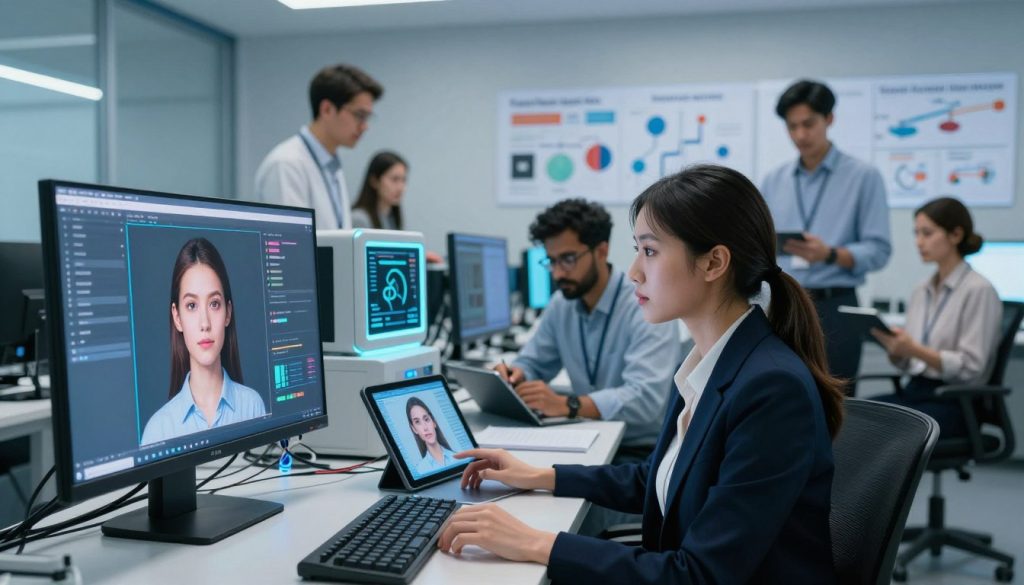
Fixing Misaligned Facial Landmarks
Misaligned landmarks often happen because of bad lighting or camera placement. Make sure your face is well-lit, avoiding shadows. Proper calibration of your camera is crucial for lifelike expressions.
If tracking still goes off, reset your neutral pose in the software. Re-centering your face helps the algorithm track your movements better. This step can save a lot of time later.
Addressing Connectivity and Sync Delays
Latency problems often come from old cables or shaky networks. Always use fast, shielded USB or Ethernet cables for reliable data transfer. Hardwired connections are better than wireless for professional work.
If your audio and video aren’t in sync, check your software’s buffer settings. Changing the buffer size can help sync streams, but might increase latency a bit. Finding the optimal balance ensures your animations match your vision perfectly.
Advanced Techniques for Professional Results
Ready to go beyond basic setups? Advanced techniques offer the precision needed for top-notch animation. They help you refine your work, making every digital movement feel intentional and polished.
Utilizing Multi-Camera Neural Fusion
Using multiple camera angles gives you a fuller view of your subject. This method fills in data gaps and boosts the accuracy of your motion logic. It combines inputs from different angles at once.
Multi-camera fusion is key for complex scenes. It prevents occlusion from hiding important movements. Your digital avatar stays consistent, even when the performer turns away.
“True innovation in digital performance comes from the seamless integration of multiple data streams into a single, cohesive reality.”
Customizing Neural Models for Unique Character Archetypes
Standard models might not fit non-human or stylized characters well. You can tweak your neural models to match unique character archetypes. This ensures your motion logic stays true to the design.
Customizing these models means adjusting facial landmarks and limb movements. This control lets you highlight exaggerated features or subtle, creature-like behaviors. Standard profiles often miss these details.
Automating Batch Processing for Large Projects
Big projects need automation to stay efficient without losing quality. Scripting your workflows lets you process lots of footage quickly.
Automation tools apply consistent motion logic to all your animation data. This keeps your project uniform, saving you hours of manual work.
Conclusion
You now have the skills to turn raw data into amazing digital shows. Neural stream capture is changing how we make virtual worlds. How well you use these tools will show in your work.
Work on making your characters feel real by improving motion logic and hardware setup. These are key to creating expressions that connect with people. Even small changes can make a big difference in how realistic your characters look.
Try out different neural models to match your creative goals. Keep practicing to get better at this fast-changing field. By focusing on detail and precision, you can make animation even more impressive.
Share your work with other digital artists to get new ideas. Talking with others can help you find new ways to make characters seem alive. Starting your journey in high-end motion capture is all about these basic steps.
FAQ
What is neural stream capture and how does it benefit my workflow?
Neural stream capture uses neural networks to analyze video feeds in real-time. It makes your digital assets come to life, just like on Instagram. This tool saves you a lot of time by turning your movements into digital assets quickly.
How does the system achieve such realistic movement compared to traditional tracking?
The system uses advanced motion logic to understand your movements. It’s different from basic motion capture because it looks at the intent behind your gestures. This makes your digital avatar move smoothly and naturally, just like a real person.
Can I achieve lifelike expressions using a standard camera setup?
Yes, you can get realistic expressions with a standard camera. High-end gear like a Sony Alpha camera or an iPhone with TrueDepth sensors helps. But the real magic happens with neural mapping, which captures your facial expressions and eye movements for a natural look.
What kind of computer hardware do I need to run these systems without lag?
You need a powerful computer to run these systems smoothly. A high-performance NVIDIA RTX GPU is key for handling the data. Make sure your GPU settings are optimized to avoid any slowdowns during your sessions.
Which software suites are best for integrating these streams into my projects?
For top-notch results, use industry-standard suites like Unreal Engine 5 or Unity. These platforms have plugins for stream integration. They let you easily add your captured data to your projects.
How do I resolve common issues like frame rate drops or misaligned tracking?
Frame rate drops and misaligned tracking can be fixed by adjusting your settings. Check your input sensitivity and latency settings. If facial landmarks are off, try re-initializing your neural mapping or adjust your lighting.
Is it possible to use multiple cameras for a single capture session?
Yes, using multiple cameras is common for advanced creators. This method, called multi-camera neural fusion, combines data from different angles. It ensures a full 360-degree view of your movements, making your captures more complete.
How do I refine the data after the capture session is complete?
After capturing, you can refine your data with neural filters. This step fills in any gaps and polishes your recording. Use software like Adobe After Effects or Blender to make your final result look professional.
Can I automate the processing of large amounts of capture data?
Absolutely. For big projects, batch processing can automate applying neural models to many files. This is great for studios where consistency is key for a unified look across characters.